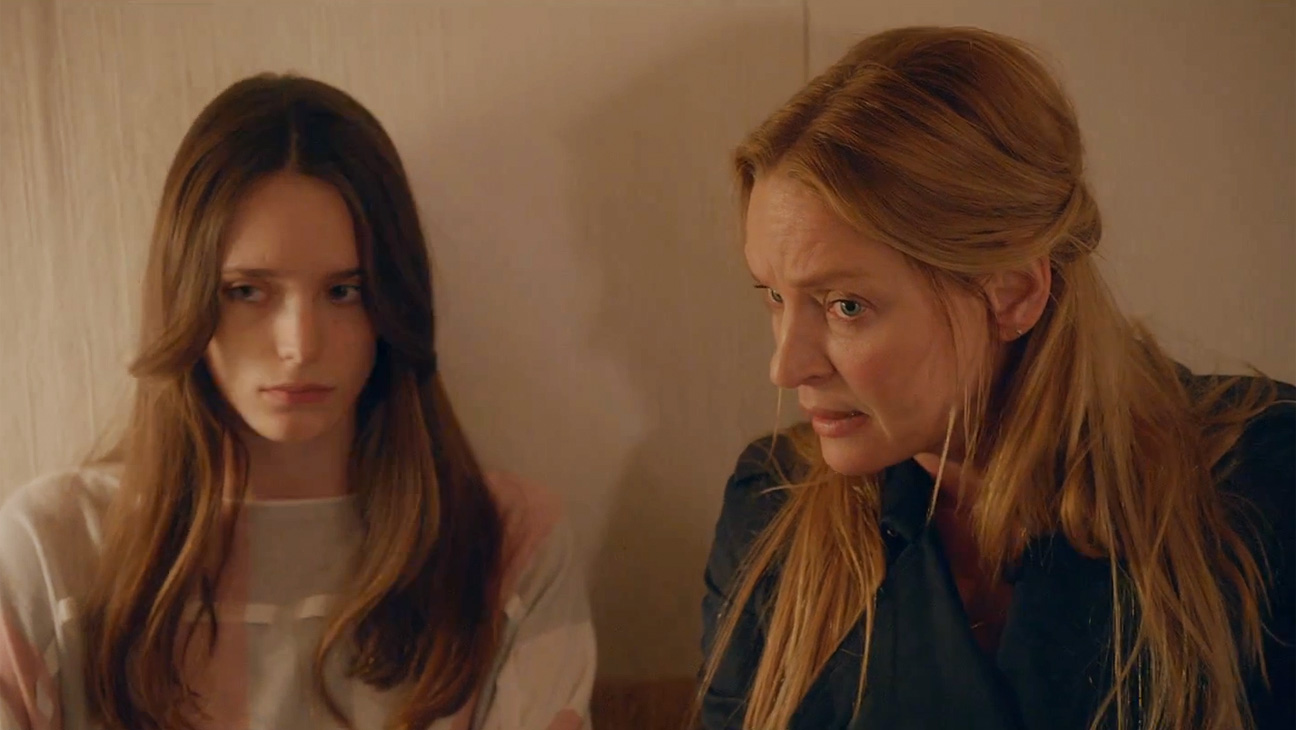
The film isn't shy about drawing the parallels between Brendan Gleeson's Father James and Christ. He is a good man. He knows that he is to be killed. He dies for the sins of others. In the final moments of the film it's implied that his gospel of forgiveness has at least one convert: his daughter picks up the phone to his killer – a superhuman act of forbearance and mercy.
John Michael McDonagh's approaches the issue of abuse in the Catholic church in a sideways and scattershot fashion. The film's characters treat it with lacerating black humour rather than earnestness. There's something deeply weird about how disconnected the performances are from any shred of sincerity. When Father James picks up his daughter from the train station and sees the evidence of a suicide attempt, he makes a joke, and she responds in kind. It's the sort of wisecrack-rich dialogue you would get in noir – and perhaps this is one.
There is a mystery, after all: who will kill the priest? But actually guessing the identity of the murderer is a mug's game. There's no hint dropped during the priest's rounds through the week that points to the killer. It could be anyone. And in a sense, it is. Father James is persecuted by the society around him, who mock his attachment to a faith and institution that has been discredited.
My favourite character in the film is Dylan Moran's obscenely rich Michael Fitzgerald, who made his millions in finance and then fled to the countryside after the 2008 crisis to avoid prosecution for the 'irregularities' he was responsible for. He makes explicit the tenor of detachment in the film, at times coming close to sounding like Camus in his bemusement at the meaninglessness of existence. The contrast that structures the story is between this community's listless sliding towards suicide and the integrity and courage Father James gains from his faith.
John Michael McDonagh calls attention to the artificiality of his film. At one point Father James discusses with his daughter what the third act twist of their play will be. On many occasions characters comment on the poor lines McDonagh has given them. The effect has the most bite when Aidan Gillen complains that his sarcastic doctor character is a cliche, and that Brendan Gleeson has a better role to play. For me this starts to smell a bit of the filmmaker apologising for his work rather than standing behind it. Admitting that the pieces don't fit doesn't actually make the pieces fit any better. If the film ends up overreaching itself, and relying a little too much on Gleeson's performance to pull it together, it's nonetheless still very watchable. And Gleeson is very good company.
26.10.18
28.9.18
Cowboy Bebop
Anime scholar Susan Napier suggests that the final two-part episode manages to reconcile ironic detachment and a conventional portrayal of the male hero:
But the series asks you to watch it in a different way – suspending the need for narrative continuity across episodes, or the urge to develop lasting themes that linger beyond the great song that plays over the closing credits. Bebob is about surfaces, and its attitude is playful rather than sincere. It's a procession of skits referencing effects and affects from other works, scrambling them together into a collage which asks you to admire its audacity, but doesn't really engage your feelings.
If anything the final few episodes draw attention to the unreal, no-stakes mode in which the anime operates. Faye Valentine finds her childhood home and leaves the adventuring life aboard the Bebop, but then realises she has nothing to go back to – she ends up rejoining the gang, finding her real family in the process. She arrives in time to warn Spike away from going back to his past, as she did. It's better to forget. But for Spike these adventures they've had together are just a dream he's been sleepwalking through. He needs to confront his origins in order to work out if he's really alive. Spike's tragedy is that he chooses Julia over Faye, a real past over an unreal present.
That reality has stakes – Julia dies, Jet gets injured, the Bebop is shot down, Spike himself is left for dead. Perhaps it's better to stay dreaming. Interestingly the standalone film (released after the series but set before the finale) warns against the seductive power of dreams. In the world of Cowboy Bebob you have to choose between meaningless death-defying spectacle or the real world of mortality and lost love.
"Perhaps Cowboy Bebop's greatest contribution to the construction of masculinity is the way it convinces its audience that traditional heroism and chivalry can exist within a postmodern framework."That's a lot of weight placed on Spike's story, which sticks rather closely to the doomed noir antihero narrative, including a damselled and fridged femme fatale to add a bit of motivation to an otherwise supremely louche character. A cynic would say that this is just another mode the anime plays with – a genre it adopts for a 23-minute spin of the turntable before moving on to horror, farce, heist, sci-fi, action, comedy etc etc etc. How far can we take these personalities seriously, given they shift with the tropes they are required to embody?
But the series asks you to watch it in a different way – suspending the need for narrative continuity across episodes, or the urge to develop lasting themes that linger beyond the great song that plays over the closing credits. Bebob is about surfaces, and its attitude is playful rather than sincere. It's a procession of skits referencing effects and affects from other works, scrambling them together into a collage which asks you to admire its audacity, but doesn't really engage your feelings.
If anything the final few episodes draw attention to the unreal, no-stakes mode in which the anime operates. Faye Valentine finds her childhood home and leaves the adventuring life aboard the Bebop, but then realises she has nothing to go back to – she ends up rejoining the gang, finding her real family in the process. She arrives in time to warn Spike away from going back to his past, as she did. It's better to forget. But for Spike these adventures they've had together are just a dream he's been sleepwalking through. He needs to confront his origins in order to work out if he's really alive. Spike's tragedy is that he chooses Julia over Faye, a real past over an unreal present.
That reality has stakes – Julia dies, Jet gets injured, the Bebop is shot down, Spike himself is left for dead. Perhaps it's better to stay dreaming. Interestingly the standalone film (released after the series but set before the finale) warns against the seductive power of dreams. In the world of Cowboy Bebob you have to choose between meaningless death-defying spectacle or the real world of mortality and lost love.
22.9.18
Nymphomaniac
Kill Bill but replace the violence with sex and the pulp sensibility with an arthouse one. And like Tarantino, best when not taken too seriously. My favourite scene in the four hour epic, which I watched on Netflix, is Uma Thurman's darkly comic turn as a deranged wife sticking the knife into her cheating husband. That scene is absolutely brutal, but also completely ridiculous. Thurman brings the kids around to the flat where her husband's infidelities took place and gives them a tour. Her husband is a fool – leaving his wife for the titular nymphomaniac who doesn't care a jot about him. He stands as a silent witness to his life falling apart, and he only has himself to blame. The nymphomaniac, Joe, just wafts through these people's lives leaving carnage in her wake. It's an expertly judged performance from Thurman – just the right side of histrionic to communicate the pain of the scenario while at the same time registering how silly it is. It's a unique moment, and well worth putting up with the rest of the film just to experience it.
Volume I by general consensus is better than Volume II, precisely because it's more playful, and tries on several different modes. Although the second part is darker, and has an excruciating sequence where Joe puts the life of her son at risk because of her addiction, the first part surpasses it in its portrayal of the death of Joe's father. Volume II has fewer tricks up its sleeve – the only bit of levity is when Joe attempts to arrange a threesome where the two men end up having an argument about which positions to take, and she has to leave unfulfilled. You could argue that the very end of the film marks a return of Trier's very wry, dark sense of humour – Joe is first beaten and humiliated by her ex-husband and protégé, and then betrayed by her confessor throughout the film – Stellan Skarsgård's monkish Seligman.
The problem with these final cruel pivots is that unlike the Uma Thurman scene, we are left to guess at the motives of the characters. The surrogate daughter was seduced, but we don't see the seduction or the arguments used to turn her against Joe. Seligman says he is asexual, but when Joe commits herself to conquering her nymphomania, some of her desire seems to transfer onto him. The story of her life fires up a sexual curiosity in him just as Joe renounces her own sexuality. It's a twist of fate – something out of a fairy-tale. And in fact all the episodes in the film have the same quality of characters pulled deterministically by forces beyond their control, conspiring to create neat stories that don't ring true when you step back from them. The film draws attention to this, with Seligman occasionally doubting the veracity of Joe's story. It's brazenly artificial – something else the film shares with Kill Bill.
Which makes you wonder what the point of it all is. Suliman's verdict focuses on the double standard whereby women who behave like Joe face far more censure than men who behave in the same way. That's fair enough, although he offers this as an excuse for behaviour that is still pretty reprehensible. Rebellion against the repressive nature of society and religion is a cornerstone of erotic art, and feels unsatisfying as a conclusion to a film about sex made in the 2010s. I think Trier's ultimate motive is to conjure up a stubborn iconoclast who keeps getting punished, physically as well as emotionally, for being out-of-step with society, an urge he's had at least since Breaking the Waves. It's a celebration of being an outcast and martyr, and not a little self-aggrandising as a result.
Volume I by general consensus is better than Volume II, precisely because it's more playful, and tries on several different modes. Although the second part is darker, and has an excruciating sequence where Joe puts the life of her son at risk because of her addiction, the first part surpasses it in its portrayal of the death of Joe's father. Volume II has fewer tricks up its sleeve – the only bit of levity is when Joe attempts to arrange a threesome where the two men end up having an argument about which positions to take, and she has to leave unfulfilled. You could argue that the very end of the film marks a return of Trier's very wry, dark sense of humour – Joe is first beaten and humiliated by her ex-husband and protégé, and then betrayed by her confessor throughout the film – Stellan Skarsgård's monkish Seligman.
The problem with these final cruel pivots is that unlike the Uma Thurman scene, we are left to guess at the motives of the characters. The surrogate daughter was seduced, but we don't see the seduction or the arguments used to turn her against Joe. Seligman says he is asexual, but when Joe commits herself to conquering her nymphomania, some of her desire seems to transfer onto him. The story of her life fires up a sexual curiosity in him just as Joe renounces her own sexuality. It's a twist of fate – something out of a fairy-tale. And in fact all the episodes in the film have the same quality of characters pulled deterministically by forces beyond their control, conspiring to create neat stories that don't ring true when you step back from them. The film draws attention to this, with Seligman occasionally doubting the veracity of Joe's story. It's brazenly artificial – something else the film shares with Kill Bill.
Which makes you wonder what the point of it all is. Suliman's verdict focuses on the double standard whereby women who behave like Joe face far more censure than men who behave in the same way. That's fair enough, although he offers this as an excuse for behaviour that is still pretty reprehensible. Rebellion against the repressive nature of society and religion is a cornerstone of erotic art, and feels unsatisfying as a conclusion to a film about sex made in the 2010s. I think Trier's ultimate motive is to conjure up a stubborn iconoclast who keeps getting punished, physically as well as emotionally, for being out-of-step with society, an urge he's had at least since Breaking the Waves. It's a celebration of being an outcast and martyr, and not a little self-aggrandising as a result.
25.8.18
"I do not want to see impaired the vigour of competition, but we can do much to mitigate the consequences of failure. We want to draw a line below which we will not allow persons to live and labour, yet above which they may compete with all their manhood. We want to have free competition upwards; we decline to allow free competition to run downwards." - Winston Churchill, speech of 11 October 1906, quoted in Paul Addison, Churchill: The Unexpected Hero
19.8.18
A Silent Voice (The Shape of Voice)
A two-hour teen drama anime that's on Netflix at the moment. My wife wanted to watch something romantic in the spirit of Your Name (which we both love). Indeed, Makoto Shinkai thoroughly recommended A Silent Voice when it came out, but actually it is both a darker and more flawed piece of work. First the darkness – the anime begins with a suicide attempt by a teenage boy, before we flashback to his primary school years where he horrifically bullies a new deaf student. The initial flood of sympathy for the character curdles as we see him shout at her, throw dirt in her face and rip out her hearing aids. The incidental details lend credibility to the depiction: the teacher is young, bored and ineffective; the are no father-figures anywhere to be seen. It's a useful corrective to to the idea that Japanese children are somehow always well-behaved, dutiful and hard-working.
The anime is about how as a teenager Shōya starts to atone for the mistakes he made as a boy, and learns how to build real friendships. Some of this is handled expertly. The pressure of social opprobrium is what leads to his feelings of worthlessness – suicide for several characters is seen as a way to remove a burden on others. If they can't get anything right, they might as well cease to exist.
The anime missteps when it dilutes its sense of realism by indulging in unnecessary theatrics. It starts out as a drama and increasingly slips into melodrama. At its most fanciful the anime contrives a serendipitous midnight meeting which is arranged almost telepathically. When the manipulation of an audience's feelings is this discernable, it loses its force. And there are several moments towards the end which stumble as a result. That's a shame, because with a few tweaks A Silent Voice could have hit just as hard as Shinkai's superhit.
The anime is about how as a teenager Shōya starts to atone for the mistakes he made as a boy, and learns how to build real friendships. Some of this is handled expertly. The pressure of social opprobrium is what leads to his feelings of worthlessness – suicide for several characters is seen as a way to remove a burden on others. If they can't get anything right, they might as well cease to exist.
The anime missteps when it dilutes its sense of realism by indulging in unnecessary theatrics. It starts out as a drama and increasingly slips into melodrama. At its most fanciful the anime contrives a serendipitous midnight meeting which is arranged almost telepathically. When the manipulation of an audience's feelings is this discernable, it loses its force. And there are several moments towards the end which stumble as a result. That's a shame, because with a few tweaks A Silent Voice could have hit just as hard as Shinkai's superhit.
15.7.18
The Last Mistress
Catherine Breillat, known for stark, provocative art-house films, turns to costume drama. And she brings a little of her previous style to the genre, particularly in the cinematography, which avoids soft or filtered light for brilliant, bright 'real' colour. Breillat says she was drawn to the material because the author of the original 19th century novel challenged the mores of his day, while also living with the guilt imposed by a Catholic society. That struggle between yielding to desire and living with sin seems to be the motivating force of the film.
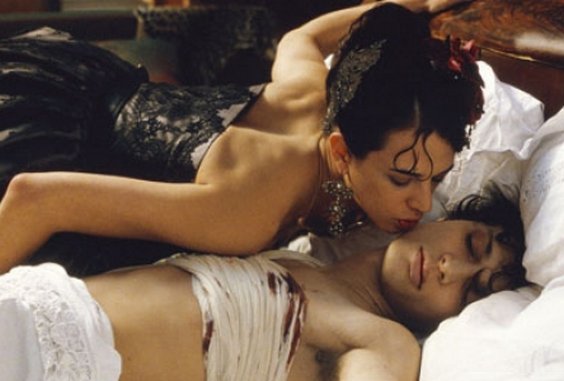
Breillat casts the libertine young – he's supposed to be 30 but Fu'ad Aït Aattou was in his early 20s when he got the part. Asia Argento is also probably too young – the film (and book) literally translates as 'The Old Mistress' in French. But Breillat was looking for a rock n roll dimension to the character of the courtesan, and Argento certainly comes with an insouciance that tears right through the mannered performances of all who surround her – slouching, smoking, grimacing like Johnny Depp's Jack Sparrow. Aattou is a model, and is mostly there to look like a Renaissance boy – big lips, big eyes, tousled hair. He's there to be ogled as much as to act.
The film is framed by the libertine telling the grandmother of his betrothed about his 10-year love affair with a courtesan, and there's certainly something of Breillat in the kind, accepting matriarch listening to the sexual liaisons of a beautiful youth. But Breillat also identifies with Aattou's character, and his death-defying passion for Argento. Aattou takes a bullet for her, and at the end of the film she begs him to shoot her if he cannot continue their relationship. This image of violent penetration is an obvious stand-in for the depth of their obsession with each other, although the love-making scenes are rather languid, as if they are both in the middle of a heroin kick.
Aattou's bride is a blond, chaste beauty who is horrified by sex, but that seems to be a turn-on for Aattou, who portrays himself as a genuine lover rather than a duplicitous rake. He is torn between the respectability of a traditional marriage in which the husband is the head of the wife (as the priest intones during the wedding) and being a slave in Argento's boudoir. Interestingly, Breillat isn't particularly interested in the pleasure he receives during his sessions with Argento – her pleasure is the focus instead. Aattou is either dominant or submissive, but there isn't really an option between the two, or a chance to trade roles in a contented, healthy relationship.
Perhaps Breillat's point is that the two sides are mirror images of each other at a time when religion warped human sexuality into sadistic or masochistic forms. Or perhaps she thinks there's no middle ground, and women are just there to conquer or be conquered.
Breillat casts the libertine young – he's supposed to be 30 but Fu'ad Aït Aattou was in his early 20s when he got the part. Asia Argento is also probably too young – the film (and book) literally translates as 'The Old Mistress' in French. But Breillat was looking for a rock n roll dimension to the character of the courtesan, and Argento certainly comes with an insouciance that tears right through the mannered performances of all who surround her – slouching, smoking, grimacing like Johnny Depp's Jack Sparrow. Aattou is a model, and is mostly there to look like a Renaissance boy – big lips, big eyes, tousled hair. He's there to be ogled as much as to act.
The film is framed by the libertine telling the grandmother of his betrothed about his 10-year love affair with a courtesan, and there's certainly something of Breillat in the kind, accepting matriarch listening to the sexual liaisons of a beautiful youth. But Breillat also identifies with Aattou's character, and his death-defying passion for Argento. Aattou takes a bullet for her, and at the end of the film she begs him to shoot her if he cannot continue their relationship. This image of violent penetration is an obvious stand-in for the depth of their obsession with each other, although the love-making scenes are rather languid, as if they are both in the middle of a heroin kick.
Aattou's bride is a blond, chaste beauty who is horrified by sex, but that seems to be a turn-on for Aattou, who portrays himself as a genuine lover rather than a duplicitous rake. He is torn between the respectability of a traditional marriage in which the husband is the head of the wife (as the priest intones during the wedding) and being a slave in Argento's boudoir. Interestingly, Breillat isn't particularly interested in the pleasure he receives during his sessions with Argento – her pleasure is the focus instead. Aattou is either dominant or submissive, but there isn't really an option between the two, or a chance to trade roles in a contented, healthy relationship.
Perhaps Breillat's point is that the two sides are mirror images of each other at a time when religion warped human sexuality into sadistic or masochistic forms. Or perhaps she thinks there's no middle ground, and women are just there to conquer or be conquered.
29.6.18
The Eel
It's interesting to have Imamura's clinical documentarian eye turn to melodrama. What you get is still pretty raw – there's drunken scuffles, mental illness, sexual harassment, an attempted rape, an attempted suicide and a pretty toxic financial entanglements. All of those things make sense from the director of The Insect Woman. But while that film was based on a real story the director gleaned from a woman he met and interviewed, The Eel is based on a novel. It therefore has structure, and its metaphors and symbols are denser, if not particularly subtle.
The film is bookended by two violent scenes. The first is bloody and ethereal, almost out of an Argento serial killer film, with blood spraying the camera. The main character Yamashita discovers his wife in bed with another man, and butchers her with a knife. He gives himself over to the police and serves an eight-year prison sentence before being released on parole with a pet eel as a companion. Yamashita prefers the company of the silent and obedient eel to that of people, who have the annoying habit of not doing what he wants. Perhaps prison sent him loopy. Or perhaps the pathology was always there, and his wife was murdered because of it. The film is about Yamashita learning to embrace other people and their messy lives. He lets go of the eel and his own solipsism when he becomes a member of a community.
The film begins with shots of office blocks and Yamashita at work. This is a different kind of prison, and Imamura suggests that a move away from the big city is the first step towards rehabilitation. The film is laden with further symbols and contrasts. After his horrific knife-work, Yamashita trains as a barber, almost as a way to learn to keep his blades under control. This is a not-too-subtle nod to the sexual repression Yamashita imposes on himself, as well as his sense of sexual inadequacy. He refuses to use a spear to catch eels with his fisherman friend, preferring to lure them into a long tube – a feminine rather than masculine way of killing things.
It's good that the romantic interest Keiko has also had enough of sexually rapacious exploitative men, finding the sullen but protective Yamashita the one safe harbour in stormy weather. She also lures him in with bento boxes while he's out fishing, underlining Yamashita's identification with the solitary eel that refuses to bite. The final moment of violence in the film is a chaotic brawl in which she accidentally hits Yamashita over the head, and then smashes the tank of his pet eel, setting it free. This is shot in the clear light of day, and it feels real rather than hallucinatory. It's about life breaking in and purging the demons that set in when you spend too long chasing a paycheck in a soulless megalopolis.
The film is bookended by two violent scenes. The first is bloody and ethereal, almost out of an Argento serial killer film, with blood spraying the camera. The main character Yamashita discovers his wife in bed with another man, and butchers her with a knife. He gives himself over to the police and serves an eight-year prison sentence before being released on parole with a pet eel as a companion. Yamashita prefers the company of the silent and obedient eel to that of people, who have the annoying habit of not doing what he wants. Perhaps prison sent him loopy. Or perhaps the pathology was always there, and his wife was murdered because of it. The film is about Yamashita learning to embrace other people and their messy lives. He lets go of the eel and his own solipsism when he becomes a member of a community.
The film begins with shots of office blocks and Yamashita at work. This is a different kind of prison, and Imamura suggests that a move away from the big city is the first step towards rehabilitation. The film is laden with further symbols and contrasts. After his horrific knife-work, Yamashita trains as a barber, almost as a way to learn to keep his blades under control. This is a not-too-subtle nod to the sexual repression Yamashita imposes on himself, as well as his sense of sexual inadequacy. He refuses to use a spear to catch eels with his fisherman friend, preferring to lure them into a long tube – a feminine rather than masculine way of killing things.
It's good that the romantic interest Keiko has also had enough of sexually rapacious exploitative men, finding the sullen but protective Yamashita the one safe harbour in stormy weather. She also lures him in with bento boxes while he's out fishing, underlining Yamashita's identification with the solitary eel that refuses to bite. The final moment of violence in the film is a chaotic brawl in which she accidentally hits Yamashita over the head, and then smashes the tank of his pet eel, setting it free. This is shot in the clear light of day, and it feels real rather than hallucinatory. It's about life breaking in and purging the demons that set in when you spend too long chasing a paycheck in a soulless megalopolis.
17.6.18
Solo: A Star Wars Story
It's a shame this thing bombed when going up against Infinity War, because it's an enjoyable space heist / western and exceeded my low expectations. Solo is a trainee cowboy who learns how to ride his first spaceship, embark on his first train robbery, and generally cross and double cross with the big bad sheriffs of the universe. There is even a hint of colonised Amerindians and enslaved robots. Both groups get the chance to cast off their chains because of Solo's shenanigans, which means the film doesn't avoid reiterating a white saviour complex. The way the mute oppressed fuel refiners are depicted is particularly cringey.
That aside, this is a lot of fun. Alden Ehrenreich and Donald Glover have the tricky task of impersonating the performances of other actors, but apart from a few ticks they settle into their own groove, for which we should be grateful. More interesting than either of them is Woody Harrelson's grizzled veteran shyster Beckett, and Emilia Clarke as the ambiguous Qi'ra, both of whom have to make their own compromises with the powers that be. I'm kinda hoping to see more of Qi'ra, and Solo leaves open the possibility of an appearance in other standalone Star Wars stories. I have a hunch that although they may not be as successful as the new trilogy, these one-offs may end up being better films.
Gave a bit of thought about why Qi'ra was such an intriguing character over the week. She's there ostensibly as the love interest, but the expectation is sent up by her decision not to follow Solo at the end of the film, and instead join the bad guys. That choice highlights the fact that she is a woman trapped by other men, and that includes Solo. There's an intriguing bit of symbolism added to this. Han Solo has a lucky charm of two dice on a chain which he gives to Qi'ra at the beginning of the film. When we see her next, she is an employee and possible lover of Dryden Vos, who dispatches underlings with a double-headed laser knife. At the end of the film, Qi'ra upgrades Vos to Darth Maul, who lights up his double-bladed lightsabre to show off what a great guy he is to work for. Qi'ra gives Solo back his trinket. He's unreliable, like his dice – and his luck. The red weapons are more deadly, but also more powerful. They hold out the prospect of her being her own woman.
That aside, this is a lot of fun. Alden Ehrenreich and Donald Glover have the tricky task of impersonating the performances of other actors, but apart from a few ticks they settle into their own groove, for which we should be grateful. More interesting than either of them is Woody Harrelson's grizzled veteran shyster Beckett, and Emilia Clarke as the ambiguous Qi'ra, both of whom have to make their own compromises with the powers that be. I'm kinda hoping to see more of Qi'ra, and Solo leaves open the possibility of an appearance in other standalone Star Wars stories. I have a hunch that although they may not be as successful as the new trilogy, these one-offs may end up being better films.
Addendum
Gave a bit of thought about why Qi'ra was such an intriguing character over the week. She's there ostensibly as the love interest, but the expectation is sent up by her decision not to follow Solo at the end of the film, and instead join the bad guys. That choice highlights the fact that she is a woman trapped by other men, and that includes Solo. There's an intriguing bit of symbolism added to this. Han Solo has a lucky charm of two dice on a chain which he gives to Qi'ra at the beginning of the film. When we see her next, she is an employee and possible lover of Dryden Vos, who dispatches underlings with a double-headed laser knife. At the end of the film, Qi'ra upgrades Vos to Darth Maul, who lights up his double-bladed lightsabre to show off what a great guy he is to work for. Qi'ra gives Solo back his trinket. He's unreliable, like his dice – and his luck. The red weapons are more deadly, but also more powerful. They hold out the prospect of her being her own woman.
5.6.18
Tale of Tales
This is right up my street – baroque, grotesque fairy tales with astonishing attention to detail and with the special effects dialled right down. Guillermo del Toro would be proud of the sets and costumes, but Tale of Tales is less controlled than a Del Toro film, where ideas are carefully explicated. Matteo Garrone is more relaxed on set, happy as he says to follow his gut.
The film is an adaptation of a 17th century collection of Italian fairy tales that inspired the Brothers Grimm. They are early, more adult versions of the child-friendly stories we're familiar with. Garrone's focus seems to be on the workings of desire in women, as teenagers, mothers and spinsters, who want a husband, a child and their beauty back respectively. All three get a version of what they want – which doesn't last.
The film isn't coy about its theme: violent desires end violently. But whether it's better to be content with your lot isn't clear, at least in Garrone's retelling. Selma Hayek's overbearing mother engineers her own downfall. But the heroine of 'the Flea' (which departs quite a bit from the original tale) kills the ogre, humbles her father, and becomes Queen. Desire is an inevitable part of the human personality. It's often (self-)destructive, but sometimes it works out anyway.
The film is an adaptation of a 17th century collection of Italian fairy tales that inspired the Brothers Grimm. They are early, more adult versions of the child-friendly stories we're familiar with. Garrone's focus seems to be on the workings of desire in women, as teenagers, mothers and spinsters, who want a husband, a child and their beauty back respectively. All three get a version of what they want – which doesn't last.
The film isn't coy about its theme: violent desires end violently. But whether it's better to be content with your lot isn't clear, at least in Garrone's retelling. Selma Hayek's overbearing mother engineers her own downfall. But the heroine of 'the Flea' (which departs quite a bit from the original tale) kills the ogre, humbles her father, and becomes Queen. Desire is an inevitable part of the human personality. It's often (self-)destructive, but sometimes it works out anyway.
Subscribe to:
Posts (Atom)