Showing posts with label Film. Show all posts

31.12.23

My year in lists 2023

The annual accounts of what I've read, watched and played in 2023, in rough order of preference. Links below go to Goodreads and Letterboxd, which I update meticulously and obsessively throughout the year.


Books

At the beginning of the year I joked that in 2023 I'll be reading Russian literature, science fiction and erotica. I've stuck to that in a roundabout way, managing to get Brothers Karamazov under my belt, sampling some more Samuel R. Delany, William Gibson and John Crowley, and getting through a heap of D.H. Lawrence (although my favourite naughty novel was actually James Salter's crisp A Sport and a Pastime). I got so bored of A Theory of Justice over the summer that I fell back in love with comics, starting with some hefty Vertigo rereads and discovering some great new creators, notably Zoe Thorogood, Maria Llovet and Andrew MacLean. My biggest discovery was actually an old creator: Sergio Toppi, who made comics from the early 70s until his death in 2012, and inspired all the dudes like Dave McKean and Bill Sienkiewicz who revolutionised anglophone comics art in the 80s and 90s.

Tim Bale - The Conservative Party After Brexit: Turmoil and Transformation [link]
Frank Kermode - Lawrence [link]
Peter Pomerantsev - Nothing is True and Everything is Possible: Adventures in Modern Russia [link]
John Rawls - A Theory of Justice [link]
Mark Fisher - Capitalist Realism: Is There No Alternative? [link]
Rachel Cusk - Coventry: Essays [link]

James Salter - A Sport and a Pastime [link]
Samuel R. Delany - Dhalgren [link]
Fyodor Dostoevsky - The Brothers Karamazov [link]
D.H. Lawrence - The Rainbow [link]
D.H. Lawrence - Women in Love [link]
D.H. Lawrence - Lady Chatterley's Lover [link]
D.H. Lawrence - Selected Poems [link]
D.H. Lawrence - Selected Short Stories [link]
John Crowley - Engine Summer [link]
Sally Rooney - Normal People [link]
Shusako Endo - Foreign Studies [link]
Anne Carson - Glass and God [link]
Kai Ashante Wilson - A Taste of Honey [link]
William Gibson - Burning Chrome [link]
Michael Perkins - Evil Companions [link]
William Shakespeare - The Two Gentlemen of Verona [link]
Christopher Marlowe - Doctor Faustus [link]
Tom Stoppard - Rosencrantz and Guidenstern Are Dead [link]

Zoe Thorogood - It's Lonely at the Centre of the Earth [link]
Alejandro Jodorowsky / Milo Manara - The Borgias [link]
Sergio Toppi - Collected Toppi vols. 1, 5 & 7 [link] [link] [link]
Mike Carey / various artists - Lucifer vols. 1-8 [link] [link] [link] [link] [link] [link]
Jamie Delano / various artists - Hellblazer [link] [link] [link] [link] [link]
Kieron Gillen / Stephanie Hans - Die [link] [link] [link] [link]
Andrew MacLean - Head Lopper vols. 1 & 3 [link]
Andrew MacLean - ApocalyptiGirl: An Aria for the End Times [link]
Maria Llovet - LOUD [link]
Maria Llovet - Eros/Psyche [link]
Maria Llovet - Heartbeat [link]
Dave McKean - Raptor: A Sokol Graphic Novel
Wendi Pini / Richard Pini - The Complete ElfQuest vol. 1 [link]
Go Nagai - Devilman: The Classic Collection vol. 1 [link]
Atsushi Kaneko - Bambi and her Pink Gun vol. 1 [link]
Masaki Segawa - Basilisk vols. 1 & 2 [link] [link]
Tatsuki Fujimoto - Chainsaw Man vols. 1 & 2 [link] [link]
Tite Kubo - Bleach vols. 1 & 2 [link] [link]
Benoît Peeters / François Schuiten - The Obscure Cities vols 1 & 2 [link] [link]
Warren Ellis / Jason Howard - Cemetary Beach [link]
Ram V / Filipe Andrade - The Many Deaths of Laila Star [link]
Tillie Walden - On A Sunbeam [link]
Christophe Arleston / Didier Tarquin - Magohamoth's Ivory [link]
Juan Díaz Canales / Juanjo Guarnido - Blacksad [link]
Rokurou Ogaki - Crazy Food Truck vols. 1 & 2
Eldo Yoshimizu - Ryuko vol. 1
Hiro Mashima - Fairy Tail vol. 1


Films

My daughter is now old enough to go to the cinema, which has meant the only new things I've seen this year have been kids films. They are overpolished and manipulative and for some reason I weep at them regardless. I watched After Hours at the Prince Charles and The Wicker Man at the Southbank and both were great. With Licorice Pizza I've concluded rather boringly that PT Anderson is probably my favourite director currently making movies.

Cal Brunker - PAW Patrol: The Mighty Movie [link]
Chris Buck, Fawn Veerasunthorn - Wish [link]

Paul Thomas Anderson - Licorice Pizza [link]
Shunya Itō - Female Prisoner #701: Scorpion [link]
Bong Joon-ho - Parasite [link]
Martin Scorsese - After Hours [link]
Robin Hardy - The Wicker Man [link]
Barry Jenkins - Moonlight [link]
François Truffaut - A Gorgeous Girl Like Me [link]
Jean Rollin - The Nude Vampire [link]
John Milius - Conan the Barbarian [link]
Alan J. Pakula - All The President's Men [link]
Alfred Hitchcock- Rear Window [link]
Tim Burton - Batman [link]


Games

This year I've mostly beeing playing Baldur's Gate 2 in fits and starts on the 20-minute train journey to and from work – I know the game so well and the fights are so short that it's actually quite snackable for a giant and ancient CRPG. I'm on Throne of Bhaal now which isn't very good but I've never played it before and want to see how the story ends. I probably won't play the Larian game for another 10 years, but think it's awesome that so many people are into it. At home I've been poking at Hollow Knight, which has its frustrations but is ultimately a rewarding and beautiful platformer.

Bioware / Beamdog - Baldur's Gate 2: Shadows of Amn [link]
Valve - Half-Life 2 [link]
Team Cherry - Hollow Knight
Sierra - Gabriel Knight: Sins of the Fathers

20.8.23

A Gorgeous Girl Like Me

A very broad comedy from Truffaut, who clearly wanted to have some fun after the dour melodrama of Anne and Muriel. It’s a vehicle for Bernadette Lafont, who plays a bawdy provincial creating trouble wherever she goes, and using her looks to try and get out of it. Lafont gives a gutsy and energetic performance, matched by quite theatrical comic turns by the rest of the cast. It’s all very silly, but at least it avoids Truffaut’s reflex of ending on a death as a way to manufacture pathos. Here the bodies pile up, and nothing is taken very seriously.

There’s a bit of fun as well with a young cinephile whose amateur footage reveals the truth in a way that individual testimony can’t. The film has a certain Rashomon quality, whereby Camille’s narration doesn’t always tally with what we see in flashback. The film starts with a student looking for the professor’s academic paper and learning it was never published. The narrative is embedded in artefacts, most prominently the tapes the professor uses to record Camille’s story. It’s not as elegant as Citizen Kane, but Truffaut may be nodding to the idea that only something as artificial as the movies can give you the final truth of the matter.

The misunderstandings created by class is an undercurrent in the film – the sociology professor starts off befuddled by the language his subject is using. Truffaut has a snigger at well-meaning intellectuals who try to sympathise with the lot of the downtrodden to the point of excusing criminal behaviour. Camille is a remorseless psychopath, whose irresistible charms manage to get her out of the most outlandish scrapes. Her simps are marks – sometimes it’s that simple. The professor’s assistant is a snob who calls Camille a tramp. But a bit like the friend-zoned Midge in Hitchcock’s Vertigo, she has the professor's best interests at heart, and Truffaut is enough of a romantic to end the film with her, and what might have been if Camille hadn’t bulldozed her chances.

30.12.22

My year in lists 2022

The end of the year is about making lists, so here's everything I've watched, read and played in 2022. The below is ordered roughly by preference, and the links go to my jottings on here, Goodreads and Letterboxd.

Films

I was living away from my wife and kids for a few months this year and filled out the evenings by watching films. A lot of films. The Truffaut deep dive didn't bring up many pearls, but the top half of the list below are definite favourites. Only one trip to the cinema to see something new this year, and I'm happy it was Everything Everywhere All At Once.

Daniels - Everything Everywhere All At Once [link]

Paolo Sorrentino - The Great Beauty [link]
Jane Campion - In The Cut [link]
Wong Kar-wai - 2046 [link]
Steven Soderbergh - Out of Sight [link]
Yoshihiro Nakamura - Fish Story [link]
Mike Nichols - Primary Colours
Clive Barker - Hellraiser [link]
Sion Sono - Love Exposure
Gregor Jordan - Buffalo Soldiers
Norifumi Suzuki - Sex and Fury
Rian Johnson - Knives Out [link]
Susan Seidelman - Desperately Seeking Susan [link]
Jon Watts - Spider-Man: No Way Home [link]
Spike Jonze - Being John Malkovich [link]
Alfred Hitchcock - North by Northwest
Jane Campion - Holy Smoke [link]
Lana Wachowski - The Matrix Resurrections [link]
François Truffaut - The Soft Skin [link]
François Truffaut - Anne and Muriel (Two English Girls) [link]
François Truffaut - Shoot the Piano Player [link]
François Truffaut - Jules and Jim [link]
Christopher McQuarrie - Mission: Impossible - Fallout
Francis Lawrence - Constantine
Mark Cousins - The Story of Film: A New Generation [link]
Lorene Scafaria - Hustlers [link]
Nagisa Oshima - Violence at Noon [link]
Shohei Imamura - Warm Water Under A Red Bridge [link]
Masayuki Miyano - Lala Pipo: A Lot of People [link]

Books

I've started cross-posting my Goodreads reviews on here and it really looks like I mostly write about books now. Harold Bloom never fails to encourage you to up your reading game. After devouring his Bright Book of Life I tried a bit of Virginia Woolf (not for me) and Leo Tolstoy (a bit better), and am planning on finally tackling a Dostoevsky next year. Three weeks in Japan meant some Japan-focused reading (Ian Buruma's short history, Kawabata, Mishima, Empire of the Sun). Took a conscious break from science fiction (Rachel Cusk, Donna Tartt, Alan Hollinghurst) but I think I'm going to go back to it with a vengence in 2023. This year I strayed out of my comfort zone, next year I'll marinade in it.

Stephen King - On Writing: A Memoir of the Craft [link]
Harold Bloom - The Bright Book of Life: Fifty-Two Novels to Read and Re-Read Before You Vanish [link]
Duncan Weldon - Two Hundred Years of Muddling Through: The Surprising Story of Britain’s Economy from Boom to Bust and Back Again [link]
Ian Buruma - Inventing Japan 1853-1964 [link]
Ernest Gellner - Nations And Nationalism [link]
Gene Wolfe - Castle of the Otter / Castle of Days [link]
Joshua Clover - The Matrix (BFI Film Classics) [link]
Jordan Ferguson - Donuts (33 1⁄3 series) [link]
Scott Plagenhoef - If You're Feeling Sinister (33 1⁄3 series) [link]
Anne Billson - Buffy the Vampire Slayer (BFI TV Classics) [link]
Liara Roux - Whore of New York: A Confession [link]

J.G. Ballard - Empire of the Sun [link]
John M. Ford - The Dragon Waiting: A Masque of History [link]
Leo Tolstoy - Anna Karenina [link]
Donna Tartt - The Secret History [link]
Alan Hollinghurst - The Line Of Beauty [link]
Florence Dugas - Sad Sister [link]
Rachel Cusk - Outline [link]
Gene Wolfe - Gene Wolfe's Book of Days [link]
Virginia Woolf - Mrs Dalloway [link]
Angela Carter - The Infernal Desire Machines of Dr Hoffman [link]
Yasunari Kawabata - The Sound of the Mountain [link]
Yukio Mishima - Thirst for Love [link]
Samuel R. Delany - Equinox (Tides of Lust) [link]

Adrian Tomine - The Loneliness of the Long-Distance Cartoonist [link]
Inio Asano - Downfall [link]
Warren Ellis / Chris Weston - Ministry of Space [link]
Peter Milligan / C.P. Smith - The Programme
James Tynion IV / Martin Simmonds et al. - The Department of Truth, Vol 1: The End of the World [link]
Junji Ito - No Longer Human [link]
Tom of Finland - The Complete Kake Comics
Doug Petrie / Ryan Sook - Buffy the Vampire Slayer: Ring of Fire [link]
Brian Wood / Rebekah Isaacs et al. - DV8: Gods and Monsters [link]
Peter Milligan / Esad Ribić - Sub-Mariner: The Depths [link]
Warren Ellis / Jacen Burrows - Bad World [link]

Games

I beat Disco Elysium and Dark Souls this year and honestly feel like I can retire from gaming. It's not going to get better than that, is it? Dragonfall was very good prestige TV, and given I don't watch TV there might be room to do a few more RPGs like it. Otherwise I've been enjoying narrative-light systems-heavy games on mobile, which are convenient snacks and a bit easier to digest. Probably will be some more of that in 2023.

ZA/UM - Disco Elysium: The Final Cut [link]
FromSoftware - Dark Souls Remastered [link]
Harebrained Schemes - Shadowrun: Dragonfall – Director's Cut [link]
Mega Crit Games - Slay the Spire
Subset Games - Into the Breach

29.12.22

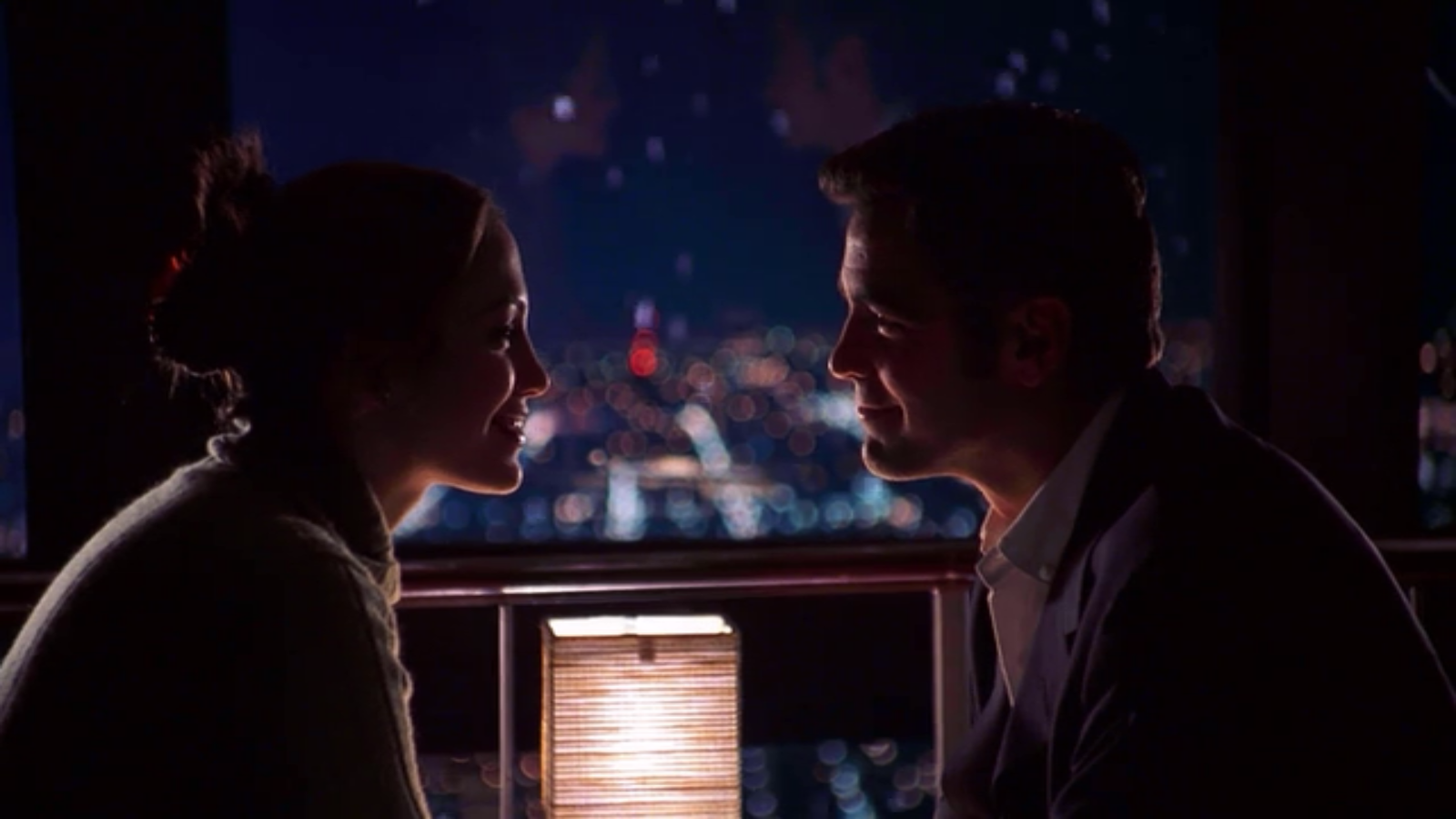
Out of Sight

Out of Sight is rightly lauded for its sharp editing, but it’s just as much a demonstration of the importance of editing in writing. Every action and exchange of dialogue cracks like a whip in this film. And it's all to a purpose – either building character or advancing the plot.

There’s some intriguing symbolism at play as well. Karen gets the unusual present of a gun from her dad, a token of familial love that Jack Foley takes away from her. But as Karen and Jack’s relationship deepens, he gives the gun back as a way of showing his own affection for her. Jack has never actually shot anyone while Karen has – so within that gesture (and the gun’s obvious phallic connotations) is a subversion of stereotypical violent masculinity. The gift giving is repeated at the end when Karen allows Jack to play with his lighter for the duration of his trip to jail. Jack fiddles with it throughout the film but he doesn’t smoke – he plays with fire but tries not to get burned. He talks his way in and out of situations instead.

There is a lot of talk in the film. It’s known for the sizzling on screen chemistry between George Clooney and Jennifer Lopez, but that’s based less on sultry looks (I mean, there’s an awkward wave…) but on conversation. The climactic moment when they get together is purposefully overlaid with dialogue. These two just can’t stop talking to each other. And it’s not really flirting either – as demonstrated by the pick-up lines Karen has to fend off at the bar. It’s an attraction built on an appreciation of manner, bearing, charm and wit as much as their undeniable good looks.

And perhaps there’s also a mutual recognition that these qualities are not recognised by the world around them. Karen is condescended to by the men in her professional life. Jack’s talents are not valued in the real economy – they’d just get him a job as a security guard. The two find solace in each others appreciation for how good they are at what they do. It’s a bit like Heat except if Pacino and De Niro get to sleep together before their big showdown.

29.7.22

Being John Malkovich

This is a film about film, right? Malkovich is the screen through which our desires and ambitions are mediated. The power of fantasy can lead to us realising who we really are, but also inspire absolutely lunatic behaviour.

But let's start from the beginning. Maxine is the foxy femme fatale and a source of erotic obsession for all the characters in the film. For Craig and Lottie, marriage and the prospect of children is disrupted by the fantasy of having an affair and subsequently of inhabiting (or fucking) a celebrity for 15 minutes. Interestingly the film circles back to having a family at the end. Being John Malkovich is an avenue through which Lottie and Maxine discover that they are queer and circuitously affirm their love for each other. Mediated by Malkovich, they form a relationship and create a truly happy family with daughter in tow.

John Cusack’s Craig Schwartz has a darker fate. His sexual frustration turn him into an abusive husband and a quasi-rapist. He is a failed artist given the opportunity to inhabit and control a successful one. It's a situation played for comedy, but Craig's jealousy and violence lead to a suitable punishment. His ability to manipulate others is denied to him, and he is condemned to observe a family life that he rejected because he indulged his daydreams of affairs and unearned success. He ends up trapped in a film he can no longer direct – the object of his desires forever denied to him.

The film is an absurdist comedy, but also a tragedy, with a bit of horror mixed in. Its meanings and significances are not entirely stable – Malkovich is also a portal through which a group of old people can escape death. Him tumbling into himself leads to a terrifying world where everyone is Malkovich, which could be a comment on self-obsession, or just a silly joke. There are more subtle threads to pull out though. The menagerie of animals Lottie looks after is clearly a way to displace her desire for a child, and a contrast is drawn with Craig's obsession with puppetry – wooden figurines that do exactly what he wants them to. This film packs a lot in and doesn't always show its workings. It takes its mad idea and tries out the different things that can be done with it. It's kind of great, and we're lucky the real Malkovich agreed to go along with it.

21.7.22

In The Cut

Much maligned when released but now reappraised. Quite right, too. I love Mark Ruffalo, both generally and in this. He's so wonderfully caring, charming and sweet. Howevermuch the film tries to put him in the frame as a suspect, it can never really pull it off. This dude is sound as a pound, and can also really look after a lady in the bedroom department. I was a lot more suspicious of Kevin Bacon, who puts in a marvellous (and rather funny) performance as the neurotic, love-sick stalker. Meg Ryan also does wonderful and brave work, doing something very different from what she is known for. In her famous romantic comedies Ryan keeps her emotions on the surface, but here Frannie keeps a mask on when navigating the thrills and dangers of New York City.

The conceit of the film is how we misinterpret what we see. Frannie thinks she sees Molloy at the beginning of the film, and by the end suspects him of being a serial killer. Campion opens her film with Frannie mistaking the falling blossoms outside her window as snow from a dream, a knowing nod to this theme. But the more potent symbol is the association made between Frannie's father, who seduces and leaves a string of women and children behind him, and the serial killer, who's signature is an engagement ring. Frannie romantic vision of her father proposing to her mother is linked to the brutal murders in the film. Campion turns marriage into a sick fetish, and has Frannie dispatch both the serial killer, and the myth she has built up of her father, at the end.

In contrast to all that we have the sexually exciting but mysterious and possibly dangerous Molloy. The film reveals that he is divorced, but sleeps on the couch in his ex-wife's place so he can help with the kids. Marriage is not a fetish for him – the relationship didn't work and he got a divorce. But he's also responsible. The mother of his kids needs help and he sticks around to provide it. He doesn't promise Frannie anything but a good time, and even then he keeps getting distracted by the case and trying to stop the killer before more girls get the chop.

Campion is less explicit about this, but her film is playing around and reversing some of the gender dynamics of the erotic noir genre. A woman is the protagonist, the men are the femme fatales. The film centres Frannie's desires in what are quite naturalistic and low-key lovemaking scenes. The film twists the male gaze into something sinister – often shooting Ryan on the streets as if she's being stalked. Frannie's closest relationship is with her sister, who is less reserved about loving too much. Their friendship is a powerful testament to female solidarity in the face of unlucky love affairs and the perils and disappointments of dating in the big city – something that the wedding-obsessed serial killer also ruins.

The film was shot entirely on location in New York, and looks magnificent. The mise-en-scene in the indoor locations is very ornate and crafted – candles, medallions, scraps of paper stuck on the walls. The camerawork is impressionistic. The pressures of the shoot meant some parts were shot quite quickly, with not a lot of thought applied to framing and blocking. But the unsteady camera and dodgy focus works to unsettle our expectations, not least about what happens next. The lack of precision also meant the actors had a bit more freedom to just inhabit the space – their performances were probably better for it. Basically this is a brilliant, unusual and quite beautiful piece of work. It's a shame it wasn't considered as such when it came out 20 years ago.

20.7.22

Anne and Muriel (Two English Girls)

Very much another go at Jules and Jim – Truffaut again adapting a book by Henri-Pierre Roché with his writing partner Jean Gruault. This is set at the turn of the 20th century and is in full costume-drama mode. Beyond a couple of outré radial wipes the direction and editing is subdued, and some scenes are so static they feel almost like tableaus or paintings. There are occasional misfires, like the gauche zoom to a bloody sheet when Anne loses her virginity. The rapid-speaking third person narrator makes a return from Jules and Jim, and the shots of the book from which the film is adapted in the opening credits emphasise the literary qualities of the film.

It's another love triangle, not so much a ménage à trois as in Jules and Jim but a two sisters falling in and out of love with a young man. Muriel is more worldly and outgoing – she becomes a sculptor that takes many lovers and has adventures in Persia. Anne is more intense – with a religious sensibility that fills her with guilt about her sexuality. Jean-Pierre Léaud is absolutely wonderful as the dashing Claude, floating about like the perfect gentleman. His character is precision-designed to have women fall in love with him, but Léaud is also good at demonstrating a teenager's confusion about the prospect of marriage and children. His composure is rattled by the mercurial Anne, who confronts him and leaves him at the end.

The film was a flop, but has a good reputation. Anne and Muriel don't have the mad charisma of Jeanne Moreau's Catherine, but their desires and heartbreaks are understandable and interesting nonetheless. This being Truffaut, there is a death at the end, and as usual with him it's a bit random – adding a weird unearned melancholy to the closing moments. Truffaut was obviously affected deeply by this strange romance, and was hurt by the indifference that greeted his film. To me it is most notable and unusual in its frank attitude to sex in what is otherwise a classic costume drama, suggesting that this period was more sexually liberated than we might initially assume.

17.7.22

The Soft Skin

Truffaut can't help himself, can he? Love triangles and then a murder. This strips back the pyrotechnics of Jules and Jim and is more sedate, almost stately, in its pacing. We spend a lot of time on the minutiae of this adulterous affair – which reveal Pierre to be gentle but muddled. The film includes several instances of the female characters getting harrassed on the street to demonstrate that our protagonist isn't a rapacious monster. And yet desire, stress and shame twist him this way and that, and in the throes of indecisiveness Truffaut consciously has him make the worst decisions possible. His young mistress is wiser than he is, and sees that the relationship has no future, not because he's married, but because the little irritations that have dogged their affair will build up and overwhelm the initial erotic thrill that kicked it off.

Truffaut is well aware of the sacrifices and compromises that strengthen a marriage. Pierre is spun about by a beautiful woman, but he still loves his wife and child. Truffaut uses his own appartment to shoot scenes of domestic bliss, affection and contentment, before moving on to show how a successful life partnership can be slowly broken apart by Pierre's impulsiveness and cowardice. Pierre's jilted wife Franca is certainly no coward – she instigates the separation and when she finds out about the other woman starts loading shells into a shotgun. The finale of the film is sub-Hitchcockian, but our time spent with the characters makes Franca's mania more explicable than Catherine's madness in Jules and Jim. It's a more conventional film, with a very conventional story, but in playing by the rules it becomes more dramatically successful than its predecessors.

13.7.22

Everything Everywhere All at Once

I laughed, I cried – often simultaneously. This isn't particularly subtle moviemaking. The jokes are broad – every opportunity for silliness is grabbed at. The concluding message about the importance of kindness and community is universal to the point of being banal. That said, this film is undeniably quite clever, and not just because its multiverse-jumping premise is complicated. That premise is used as a metaphor to explore some pretty  dark and heavy stuff.

Michelle Yeoh's character Evelyn is overwhelmed. Everything is happening all at once and she can't cope. But some of this she brings on herself – she's so stressed and inflexible that she treats others poorly, and her family in particular are suffering as a result. Keeping their lives on track is proving difficult even before the alternate realities start to impose themselves. That just adds to the confusion and the general sense that Evelyn cannot assert agency over events. She's buffeted along – struggling to contain her anxieties and disappointments.

The idea of a branching universe highlights the doubts the characters have about the choices they have made. Would Evelyn's life have been stuck in a rut if she had decided not to get married, or move to the United States, or have a child. Her alternate selves seem more beautiful and successful than she is. The film physically confronts her with these alternatives, but this just literalises the poisonous regrets that gather in the depths of depression – the feeling that your life has been wasted, that you've made a mess of it.

Evelyn's daughter Joy is ironically named. Her mother's cold and exacting attitude is suggested to be the cause of a spiral into nihilism and self-destruction. The multiverse metaphor is bent in this direction as well – used as a way to highlight our smallness and meaninglessness in a vast, inexplicable and uncaring cosmos. Joy's lack of support at home has created a monster. Her coping mechanism has been to denounce everything and everyone as worthless – to let go of all attachments, because it's less painful to be alone than to keep caring about what others think of you.

Joy almost succeeds in dragging her mother down into this pit. What saves them isn't yet another invasion from a different and happier reality, but rather a recognition of what they already have. Evelyn doesn't give up on her daughter, even when facing the threat that she'll turn into a terrifying supervillain. Their eventual reconciliation is powerful because the film is so good at depicting the anxiety and depression that have pushed them apart. It feels real and earned, notwithstanding all the jokes and inventive martial arts that accompany it. It's a silly film, but also a smart one, and one that's bursting with heart.

Jules and Jim

This is an adaptation of a semi-biographical novel, so it should be closer to realism than the genre exercise of Shoot the Piano Player. The friendship between Jules and Jim is believable – both in the manic throes of their first meeting and their subsequent struggles over loving the same woman. But Jeanne Moreau is less a person than a force of nature that sweeps people away. Her capacity and appetite for love, both affection and sex, is insatiable. And the deprivation of it drives her mad. Truffaut and his two male heroes cannot resist indulging her every whim, even the most bizarre. It gets to the point where she threatens Jim with a gun and yet at their next meeting he still jumps in her car as if nothing has happened. Her madness is catching, her obsessions become our obsessions. She is beautiful and we cannot resist.

The blistering energy of the first hour is what the film is known for, where cuts are rapid and the voiceover narrates at triple time. But I'm old and found the love triangle that develops in the middle part of the film a lot more interesting. The film slows down a bit and allows the two male leads to put in some great work depicting the effort and labour of keeping Catherine happy. For all his formal ingenuity and cinematic tricks – and this has plenty of wild crane shots, outre wipes and extended tracking shots – the film works because the actors manage to realise what this bizarre menage a trois might be like. Until the very end, that is. As Moreau's behaviour becomes increasingly erratic I stopped believing in her ability to charm the men around her. Truffaut's idolatry defeated me, and the absurd and abrupt ending to the love triangle fell very flat. I get the sense that Truffaut relies on random death to supply the finale of his films almost as a reflex. In Jules and Jim, the ultimate fates of the characters diminishes rather than elevates the passion and strife of their relationship.

11.7.22

Shoot the Piano Player

Starts with a man describing the difficult work of love and marriage before it sprints away from all that boring adult stuff. A curiously adolescent film – the main character has a teenager’s shyness with his crush but is comfortable with paying the prostitute next door. It’s almost as if he can only relax around women when the sex question is settled.

We’ve all been there when we were 14 or so. We know what we should do – we rehearse it over and over in our mind – and yet when the moment of action comes we hesitate and run away. It’s Hamlet syndrome applied to the perilous process of asking girls out. Not just that – in the flashback Truffaut makes clear that the main character struggles whenever the compromises of life and love are revealed. Despite the title the piano player is never shot – its the women around him who die as a result of his timidity.

I get the sense that piano playing, or indeed any kind of creative endeavour, might be a way to sublimate the anxiety of living in the real world. That kind of emotional turbulence and paralysis might fuel great artistic achievement, but the real heroes are the guys who are home every evening to care for the wife and kids.

3.7.22

The Great Beauty

No doubt Jeb is supercilious and self-indulgent, and perhaps some would find both him and the film insufferable. For all its drifting atmosphere and perverse non-sequiteurs, it's not even particularly subtle about what it's about. Jeb fell in love at 18 out in the country and wrote a novel that was acclaimed as a masterpiece. He moved to Rome and spent the next few decades partying, shagging and doing a bit of journalism about the absurd cultural scene in the city. He never published another book. Jeb's Rome is a distraction. The quote that opens the film spells it out for you: "travel is useful". The saint's words of wisdom at the end underline the point: "roots are important". Rome is rootless – a hypnotising froth of sex and architecture and blasting dance music. Jeb's friend's literary ambitions don't get him anywhere, and he leaves. At the end of the film, Jeb does as well. He returns to the site of his first romance, and starts writing again.

Sorrentino does his best to make Rome as dazzling as possible – full of glamorous, beautiful women and even more glamorous and beautiful scenery. His camera swoops across vistas and details of the city, but doesn't linger. It cuts to the next gorgeous image, flitting about without resting or absorbing anything. The film is a bit of a portmaneu of short stories Jeb wafts through, and some of these sequences can feel pretentious. I think that's offset by the very funny scenes of the bizarre artistic happenings Jeb and his circle of decandents attend as a way of relieving their ennui. At the end the film seems to suggest that art is all a bit of a trick, a semblance of profundity and meaning without much to substantiate it.

What grounds the film is Jeb himself. We spend a lot of time with him and his talkative pals, and get quite a well-developed sense of his character. His life is so saturated with pleasure that he's become desensitised to it. This is quite a sexy film only to show that Jeb is very, very bored of sex. And then people start dying around him – first his long lost love, who broke off their youthful passionate romance to marry a man who was good company. Then the suicide of a friend's rather intense son, the funeral for which Jeb expects to be one big insincere performance, until the melancholy of the occasion breaks through to him. Finally, a dalliance with a stripper, who disappears quite suddenly from the film and his life. All of this punctures the frivolity of his life in Rome. Underneath the jaded exterior, Jeb is still a romantic – his 35-year creative block more of a swerve away from a broken heart.

The references to the 1960s Marcello Mastroianni-fronted masterpieces by Fellini and Antonioni are so blatant they almost become jokes in themselves (Jeb wears the same glasses). La Notte is undoubtedly a more profound and beautiful film – but it's also a more difficult one. Antonioni was fully committed not only to the listlessness of modern life, but to its inexplicability, and his film is weirdly abstracted from the humans it depicts. Fellini is more invested and more troubled by the end of faith and the licence that gives to sexual and moral depravity. The Great Beauty is quite a bit closer to La Dolce Vita (not least in the echo of the name), but is less eager to wag a finger at hedonism, and is ultimately more hopeful that these lost souls can find a kind of redemption in the art they make, even if their attempts look ridiculous and the meanings they produce are just circus tricks.

19.6.22

Warm Water Under A Red Bridge

Imamura's final film takes the fable-like quality of his late masterpiece The Eel and pushes it further – it's soppy and silly and a bit of a disappointment. We have another exile from the city – a laid-off salaryman trying and failing to find another job in Tokyo, whose wife and son have moved out to live with his parents-in-law. He has befriended a hobo philosopher who dies at the beginning of the film, but leaves behind a tale of treasure he's hidden in a village townhouse next to a river with a red bridge. Our hero goes after it, and finds renewal (and new love) in rural Japan.

Imamura's camera retains a documentary quality – with very long takes capturing the action at a distance. Conversations are held with a two-shot, and rarely cut to close-up. The naturalism is broken up by intrusive sound cues, and occasional really garish effects, making the film quite ugly to look at. Although there isn't a voiceover, the tone of the story resembles something like Amélie or The Royal Tenembaums – highly-stylised films that emphasise the make-believe world they are portraying (the immigrant student marathon runner and his demented trainer really do look like they've stumbled out of a Wes Anderson film). Imamura's film was released a year after those two, and it looks far worse.

There's no golden bhudda to be found, of course. The treasure is the women who live in the house, who gush unreal amounts of water when they orgasm. The film is refreshingly sex-positive – the philosopher keeps popping up in flashback to insist that debauchery is a fine goal to have in life, and that throughout history the wealthy have squeezed the lower classes so they have time to indulge in it. Saeko is unfortunate that her body betrays her strong sexual appetites so obviously – and the film hints at her sense of shame, although that's quickly overcome through the intervention of our good-natured hero. Ultimately the waterworks are a symbol of natural replenishment and health, and something to be celebrated. It's unfortunate that the film does so in such a crass and silly way – ending on a shot of the fountain made by the main characters copulating creating a awful-looking CGI rainbow.

18.6.22

Violence at Noon

Notable for the enormous number of cuts used in the film, which was startling at the time. Oshima may have wanted to suggest the fracturing of modern society with the technique, but given this has become how a lot of modern film looks nowadays (borrowing from innovations in advertising and music videos from the mid-1980s onwards) it just makes this 1960s artifact look sleek and dynamic. The opressiveness of rural poverty doesn't feel quite as grinding when sliced up into 20 shots a minute.

It's a tale of a violent rapist and serial killer and the two women that cover for him – they are in love with this monster and confused about what to do. Oshima begins the film in quite an uncomfortable way by implicating the viewer in the horrific actions of the criminal – his victim is sized up and then attacked largely from his point-of-view. Perhaps the suggestion is that we all have this capacity for sexual violence, Eisuke just can't control himself. At the end of the film he gives contradictory explanations for his behaviour, saying that the love of a beautiful woman might have caged these beastly impulses, and then going on to say he probably would have committed his crimes anyway.

Oshima is reluctant to explain away his behaviour as a product of poverty or neglect. In one of the most famous lines in the film, Eisuke sarcastically tells the teacher he has married that she taught him democracy. His behaviour isn't some holdover from the belligerent hypernationalism of the war years. Although his criminality emerges from the background of the failure of a collective farm, its clear that his capacity for violence and anti-social tendencies are there from the start. Oshima seems to be indicating that the ideals of humanity and love taught to children in schools are contradicted not just by conditions on the ground, but by human nature.

Eisuke's frustrated and murderous energy is contrasted by Genji – the depressive son of the head of the village, who vies with him for the affections of the two female characters. Genji despairs at the political responsibilities he is due to inherit. He is a good man put in an impossible situation, and resolves on suicide – whatever violent impulses he has are directed inwards. The relationship with his lover Shino begins as a commercial exchange (she borrows money to start a trout farm), but she is dutifully willing to join him in death. Eisuke's sexual jealousy inadvertently saves her life – he tries to rape her corpse, which revives her, but begins his descent into depravity.

Jealousy emerges as the dominant theme between the two female characters as well – Eisuke's wife Matsuko resents Shino's hold over Eisuke's sexual imagination. They are both dumbfounded by Eisuke's behaviour, and take too long to stop treating it as a private matter between themselves and give him up to the police. Women's misplaced sense of duty and devotion to men may be in Oshima's sights here. Outdated and oppressive gender norms end up perpetuating Eisuke's killing spree.

There's a lot going on in the film, and a lot of it is ambiguous or contradictory. For me it doesn't have the brutal clarity of Oshima's earliest films Naked Youth and The Sun's Burial, which are scrappier affairs, less formally innovative and more thematically direct. Violence at Noon is richer and more mysterious, the two women have more opportunities to escape the violent man that in other Oshima films, and yet frustratingly they remain infatuated with him.

17.6.22

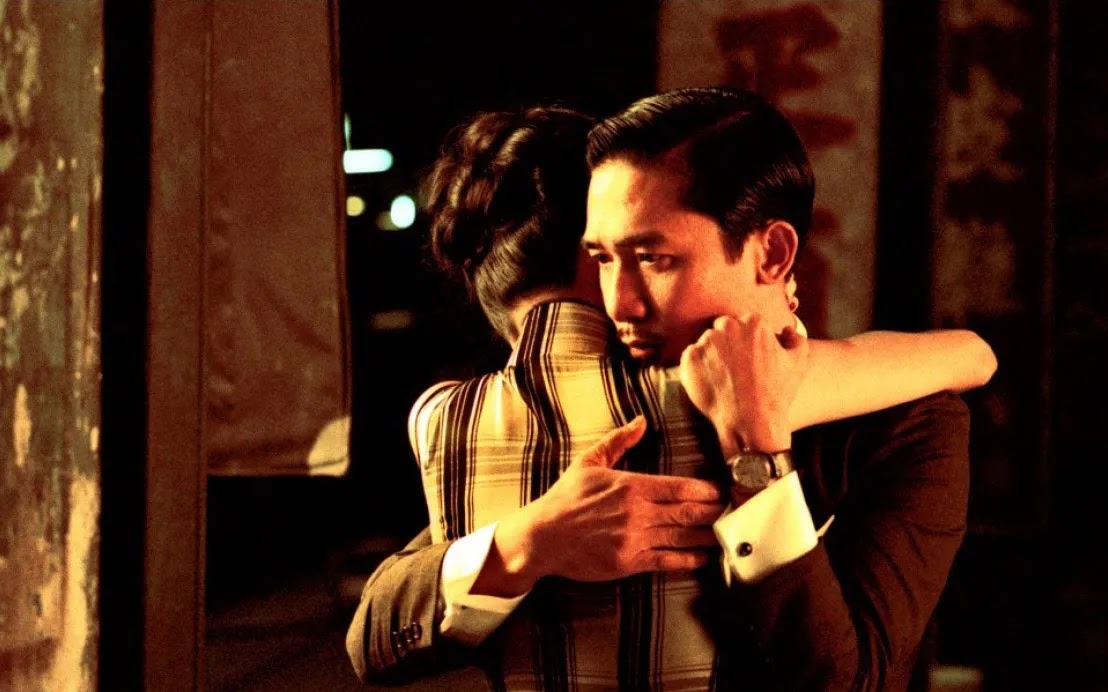
2046

This sequel to In The Mood For Love is more up my alley. Tony Leung has a bit of a personality transplant and becomes a playboy, gambler and pulp novelist – indulging in all the vices he wouldn't allow himself as a dutiful but unhappily married man. Losing Maggie Cheung will do that to a fellow. Perhaps this past idealised but renounced love affair makes it impossible to commit anymore. Leung becomes even more of an observer, he's more distanced and cold towards the women he gets involved with. That aloofness is matched by Zhang Ziyi, but while the steamy affair she eventually succumbs to leads her to fall in love, Leung pushes her away. In a telling monetary metaphor, he's quite happy to buy affection, but he refuses to sell it.

Leung becomes a viewpoint character in what is a more distended and unfocused film – it's a bit more of a portmanteau like Chunking Express. Like that film, 2046 gives Faye Wong a happy ending running off with a young lover. The most bizarre addition to Wong Kar-Wai's repertoire is how that story filters through to a sci-fi novel Leung is writing, where his own feelings and reminiscences come to the fore. Leung is attracted to Faye, but recognises that it would be wrong to take advantage of this young idealist. Renunciation of love is what anchors Leung's personality – but he's sympathetic enough to give Faye Wong and Zhang Ziyi a way out of Hong Kong and an opportunity for a brighter future abroad.

The film doesn't add up to very much, and it seems to have changed quite a bit over a long period of development. It was originally meant to be shot in Shanghai, and wasn't supposed to be a sequel. The linking technique of a hotel room number was arrived at a bit randomly, and gradually the film started merging with In The Mood For Love. It could have turned into a mess (some might think it is a mess), but somehow in the edit Wong Kar-Wai manages to create a sense of momentum across the disparate plot strands. It might be my favourite thing he's done – Tony Leung has probably never been more handsome and charming, and Zhang Ziyi's passionate performance really gives the film a powerful punch.

12.6.22

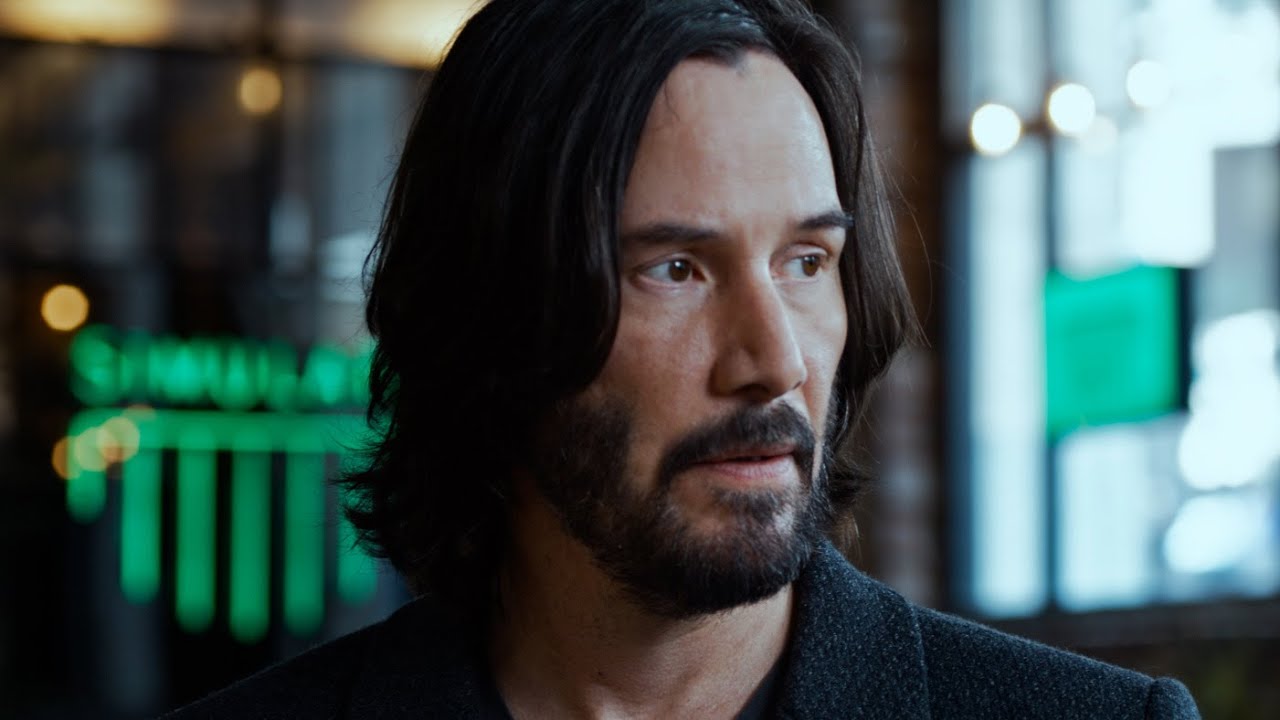
The Matrix Resurrections

Very much enjoyed the cringe stuff at the beginning calling out the fact that this is yet another Hollywood cash-in sequel – especially the awful creative meetings raking over everything that made the first Matrix film such a beloved classic. It feels like Lana Watchowski poking fun at the plethora of exegesis her creation has spawned, as well as her price for going down the same rabbit-hole again.

There is also the implicit recognition that the first film relegated Trinity’s character to a cheerleader and romantic interest for Neo basically as soon as the awesome opening sequence ended. This new resurrected version is about Trinity’s own importance to the story – and how her love for Neo was so strong it could power the Matrix (and The Matrix) all on its own. The metaphor is a blunt one, but it’s nice to see her do the Superman thing for a change. And once again the business suits that imprison the minds of human beings are put in their place and forced to make room for the rebels and artists to liberate the world.

17.11.21

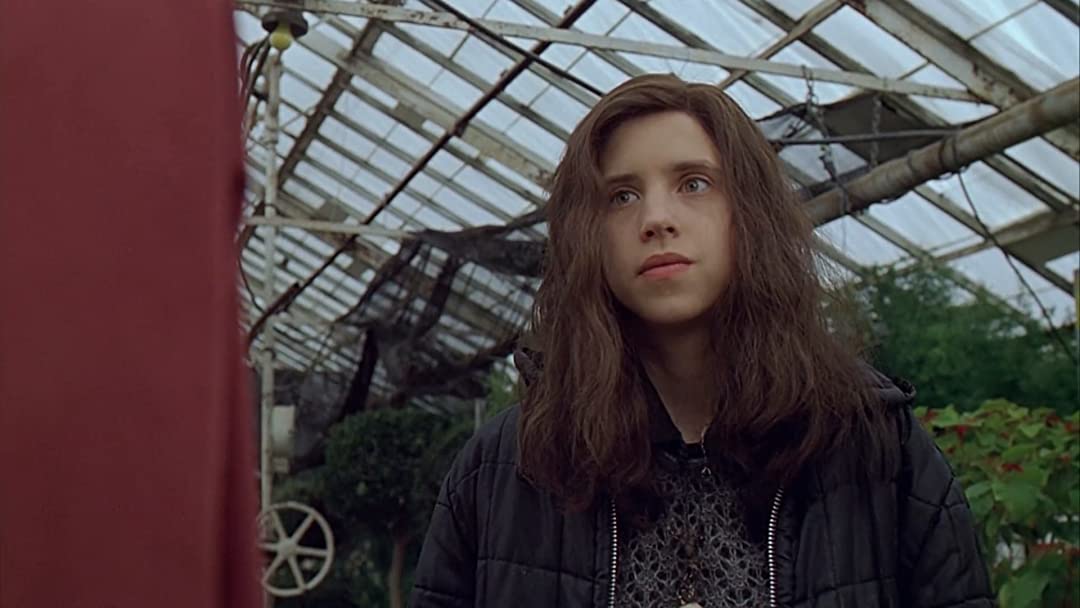
Ginger Snaps

What if a teenage girl got bitten by a werewolf? The metaphor is usually used to explore the bestial nature of adult men and the (sometimes sexual) violence they are capable of. That's present in Ginger Snaps as well, but the focus is shifted to girls hitting puberty – the lunar cycle explicitly linked to the menstrual cycle. Ginger becoming a werewolf drives new urges – to snog boys, smoke dope, fight bullies and ultimately to rebel against her family.

But that's only half of it. Ginger isn't really the main character – her younger sister Brigitte is, and the film is about their relationship and their toxic family environment. The two sisters are incredibly close, they have no friends and they are obsessed with death – perhaps as a fantasy of escaping their cloying family and dreary town. But Ginger is the instigator of their disturbing reiterated suicide pacts, and her lycanthropy only extends her control over Brigitte. In trying to manage her sister's transformation, Brigitte has to upend this power imbalance. She loves but is terrified of her sister, even before her werewolf problem. The final shot of the film tries to capture that very mixed emotion, as Brigitte finally gains her freedom.

But really the most moving part of the film happens earlier. For much of its running time, the mother is a source of brilliant comic relief. Her daughters find her attempts to engage with their problems ridiculous – even though the advice she gives (and that of the cheery school councillor) is eminently sound. Teenagers having to talk to adults about sex is always embarrassing, and displacing that with becoming a werewolf just highlights how out-of-touch parents might come across. But there's a great turn towards the end of the film, where the mother rallies around and chooses to sacrifice everything for the sake of her daughters, no matter what they've done. Brigitte accepts her help but is kind enough to say that it's not her fault. And then the mum says that it is, and apologises.

They are both right – Ginger is obviously out of control, but a parent shares some responsibility for their children's behaviour, even when they are doing their best. Despite baking the cakes, being supportive and making an effort, the mum has failed to nurture her daughters. She hasn't found a way to relate to them that can arrest their (self-)destructive behaviour. That's a tough lesson to absorb, and yet she does it and is determined to keep trying. That steely determination to stand by your children in the face of failure is admirable and very touching.

8.11.21

My Love Has Been Burning

A very didactic feminist film from Mizoguchi – starting out with a statement from the filmmaker to the audience dedicating it to women seeking freedom around the world. In 1949 the sentiment may have been provocative, but today the lectures about human rights land like platitudes.

The film still has the power to shock, however. Mizoguchi doesn’t flinch from depicting the physical and sexual brutality inflicted on women who are basically sold into slavery or are imprisoned. That sequence, which comes midway through the film, has an almost mythic quality – where the radical leader and his followers wait in the woods like Robin Hood and his merry men while our heroine sneaks into the workhouse to witness its horrors.

That's a far more powerful moment than the subsequent domestic drama where we discover that the politician we thought was on the side of women's emancipation is a cad, and an elitist one at that. The film ends on an idea of solidarity between women of different classes, committed to educating each other and dreaming of a better world while male politicians advance their careers and leave them behind. It's a well crafted statement, but the characters remain little more than vehicles for ideas, and ultimately I don't find Mizoguchi’s firebrand activism as moving as Ozu's contemplative quietist studies of the burdens of familial obligation.

18.10.21

The Lighthouse

Going into this I expected another example of the “is it all a dream?” film, where realistic and fantastic interpretations are equally weighted and you get to pick what you prefer. At its best, like in Pan’s Labyrinth, this is just the opening part of a broader argument about the origins and purpose of myth-making. The Lighthouse doesn’t have such big ambitions. In fact, whether what we’re seeing is real or not doesn’t really matter. It’s like asking whether the action in Waiting For Godot or Blue Velvet is real. The film isn’t about what’s going on in the character’s heads but what's going on in our heads. It presents a metaphor, whereas Pan’s Labyrinth is about the creation of metaphors.

And while the mythological and psychosexual accoutrements provide some interesting visual cues, at its heart the film carries forward The Witch’s exploration of the evils of authoritarian patriarchy. Interestingly, although couched in familial (and psychoanalytical) metaphors, the oppressive relationship here is an economic one, where Daniel Defoe is the worst boss in the world, and where Robert Pattison’s final descent into madness is precipitated by the arbitrary withholding of wages.

One wonders why Eggers is so interested in unearthing these historical examples of religious or workplace tyranny – the echoes of which are slowly fading in the modern world. Perhaps it’s good to be reminded of how truly awful the past was. Eggers’s young heroes endure extreme emotional abuse at the hands of their elders and are driven to strike dark bargains, or just to strike out, in order to escape their hopeless situation.

The contents of the knowledge that Pattison gains at the top of the Lighthouse isn't as important as the fact it was kept from him for no reason. Whether it's fire, or sexual awakening, or knowledge of good and evil, the rebellion of the young against the patriarch does not end the pain of existence. The seabirds, old souls representing the ideological remnants of the old order, remain to peck away at whatever freedom is carved out from overthrowing your masters.

27.1.21

Drunken Angel

Kurosawa's breakout feature stars a gruff, irascible but golden-hearted doctor working in a slum and doing his very best to heal both the bodies and the souls of his patients. The metaphor is bluntly stated and frequently reiterated – dirt and disease are the physical counterparts of the moral evils committed by the yakuza who control the neighbourhood. There is a giant swamp in the middle of the district to underline the point. 

The doctor tries to save the life of a young gangster who he diagnoses with tuberculosis. But treatment involves staying away from the drink and excitement of life as a criminal. Ultimately it's impossible to stay clean and healthy while living in the city. The film floats the prospect of returning to health and finding love in the countryside, but the yakuza cannot stay away. He's stuck in the swamp, and dies there.

The film is notable for being Kurosawa's first collaboration with Toshiro Mifune, who really does dominate the screen. He can be as suave and debonair as Marcello Mastroianni in 1960s Rome and as physical and dangerous as a jungle cat. There's a scene of him taking a girl for a spin in a nightclub where he looks like he could command armies with a swing of a hip. Mifune is emasculated by the introduction of a bigger and badder crime boss, but he sells the desperation he falls into well, and is given a grandiose death scene as a fitting send-off. 

Mifune's energy is well matched by that of the doctor, played by Takashi Shimura, who cannot stop himself speaking his mind and never speaks when he can shout. Without the portentous body politic metaphor the film is basically a character study of a man stuck where he is because he cannot grease the wheels of social advancement. He calls bullshit everywhere he sees it and as a result cannot escape being engulfed by it. Kurosawa doesn't quite know where to take the character. The ending gives him a little moment of grace with a young patient he has managed to cure, but that is set against a lifetime stitching up criminals and burying bodies, and it rings a bit false. Kurosawa may have had his first hit, but it seems he was still learning his craft.