27.9.26

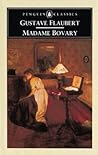
Madame Bovary

Madame BovaryMadame Bovary by Gustave Flaubert
My rating: 3 of 5 stars

This maybe a basic opinion but it is hard to enjoy a book where there is no one to root for. Flaubert’s ironic detachment and mockery of his characters is counterbalanced by moments in which their point of view is depicted with a hyperrealistic focus that engenders sympathy. Emma is a reckless fantasist but Flaubert’s sweeping florid style goes some way to endear her to the reader, to the point where her horrible fate feels cruel. She is a Quixote who’s obsessed with love rather than adventure, and some (like Harold Bloom) can be smitten. I still found her quite stressful to be around, perhaps because my parsimonious (bourgeois?) temperament finds debt horrifying.

So who survives in a world where enchantment and naïveté are punished so brutally? The scheming Lheureux is a transparent villain, the agent of Emma and Charles’s downfall. The book ends with Homais, the Voltaire-obsessed neighbour whose meagre capabilities establish him as a person of renown through sheer tenacity. He isn’t a leech like Lheureux, but his activity in the field of ideas is hardly above board either. Flaubert treats him as a figure of fun, and perhaps his success should be seen as an indictment on the imaginative potential of the society that Flaubert is writing about. But perhaps it’s also a model for enduring in such diminished circumstances.

View all my reviews

23.9.26

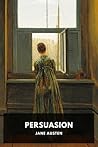
Persuasion

PersuasionPersuasion by Jane Austen
My rating: 5 of 5 stars

When I read this in school I felt frustrated by the propriety which delayed the reconciliation of the couple. I wasn’t reading closely enough, because Austen explains very well why Wentworth’s pride and resentment prevented him from immediately pursuing Anne again once he had made his fortune. It is also made clear at the very beginning of the novel that while Anne was persuaded out of accepting his offer of marriage, she had persuaded herself soon afterwards (when all of Wentworth’s promises of a brilliant career were fulfilled) that she had made a mistake. Austen is very severe with her heroine however. At the very end, Anne insists she was right to be persuaded, because it was the dutiful thing to do, even if the consequences were unhappy. Austen and Anne are not utilitarians.

This is a short and highly patterned novel. The contrivances of the plot arrange characters and scenarios in such ways as to continually suggest ironic echoes of the central dilemma of Anne rejecting Wentworth. Louisa’s self-assurance in the first half is a foil to show Anne’s superiority. And Mr Elliot and Mrs Clay in the second half are like something out of a crime novel – utterly psychopathic operators in the marriage market. Lady Russell is not quite so villainous, although it’s very hard for a modern reader to be sympathetic with her prejudiced outlook. This book is justifiably seen as Austen’s most accomplished achievement, and I’m finally in agreement with that view.

View all my reviews

29.7.26

The Fall of Hyperion

The Fall of Hyperion (Hyperion Cantos, #2)The Fall of Hyperion by Dan Simmons
My rating: 3 of 5 stars

This book is best enjoyed when you accept that the central figure of the Shrike will remain ambiguous. And not in a Gene Wolfe sense where some hidden coherence can be unearthed if you study the text hard enough. Simmons uses the Shrike as the catalyst for plot and tension, and its actions are not consistent with the motivations of any one faction. It is there to look cool, be menacing and to make things happen around it.

Everything else in the book fits together quite neatly. The final stretch is impressive in piling on revelation upon revelation. There is a lot of set up to get to that point, however, and the beginning of the book is rather tedious. The pilgrims arrive at the Tombs with not much to do, and there’s a lot of random wandering around which dissipates the momentum built up at the end of the first book. The structural device, of one person at the heart of government dreaming the actions of the pilgrims, is also weaker than the Canterbury Tales-derived storytelling competition in the first book. It’s telling that the first person narrative is abandoned at the end.

Basically, this is an overly ambitious series that doesn’t quite live up to the expectations it sets up. But it’s still worth reading, not least because of the baroque and fantastical world-building Simmons is so good at (doing the opera part of space opera very well). And its concerns about treacherous AIs nods to a very 90s cyberpunk attitude that would feed into bigger pop cultural events like the Matrix films.

View all my reviews

22.5.26

The Canterbury Tales

The Canterbury TalesThe Canterbury Tales by Geoffrey Chaucer
My rating: 4 of 5 stars

I couldn’t hack the original Middle English and settled for the Coghill translation – which is very readable and has sparse but occasionally entertaining endnotes. The big innovation here is the potential for irony inherent in contrasting the description of the teller of the tale with the tale itself, and how some tales comment on and undercut the tales around them. The showstoppers are the first one-two of the Knight’s Tale and the Miller’s Tale, and then the extended character work of the Pardoner and Wife of Bath’s account of their lives. I also liked the Summoner’s Tale which, like the Miller’s, climaxes in a fart joke, and the Merchant’s exploration of jealousy and cuckoldry that ends in ridiculous sexual antics up in a tree. The more pious tales are less interesting – the testing of a wife’s faithfulness in the Clerk’s Tale is sadistic, the Monk rattling off examples of hubris is monotonous, and the Prioress’s tale of a child killed by Jews is depressing. Chaucer is at his best when questioning the sexual politics of his day, and at his worst when fretting about the sinfulness of his stories and the status of his soul.

View all my reviews

19.4.26

Perhaps the Stars (Terra Ignota #4)

Perhaps the StarsPerhaps the Stars by Ada Palmer
My rating: 3 of 5 stars

The trolley problem argument at the forefront of the series thus far is now superseded by an even bigger conflict between different visions of the future. Do we focus inwardly on mapping human psychology, conquering death and building utopia on Earth, or do we focus outward on the painful project of colonising other worlds. Palmer is a keen student of science fiction, and it’s fun to consider this dilemma as a way of contrasting the 60s new wave with classic space opera. The book presents this as an either / or proposition, in that the Earth becoming too comfortable reduces the incentive to look elsewhere, and Palmer is very good at continually reversing the reader’s perspective of which side should come out on top. Of course, at the end an accommodation is made, but the journey is a fun one.

Eventually, at least. This is a long book, at the end of a long series, and for me the first third really dragged. Palmer gets a little too bogged down with her new narrator, and I just wanted to get back to Mycroft and the war. She is at her most impressive when upending expectations with each successive chapter, and the book really picks up when she gets back into that groove. Ultimately I found the series interesting rather than compelling. But the ideas it brings to play leaves many more gripping works of speculative fiction in the dust.

The underlying question about the reliability of the narrative we have, given our narrator sees ghosts, says he has witnessed miracles and believes in a living god, is rendered moot for me by the book’s metatextuality – its overt geeky references to its influences, from Homer, the French Enlightenment and science fiction. Whether Bridger and Jehovah are elaborate conspiracies isn’t as interesting a question for me as the metaphors they present if they are ‘real’ in the fiction of the book. Bridger’s ability to bring his fantasies into reality suggests a comment on how human ingenuity reverse engineers discoveries from our imaginations. Jehovah wrestling with the problem of evil generates torrid existential emotions about our own consciousness embodied in a universe that is both accommodating and indifferent. It is slightly mysterious why Mycroft, who as a student of Voltaire and Diderot should be sceptical of providential thinking, would buy into Jehovah’s claims so completely. But that perspective is used to test out absolute values against the contingencies we face. The long final chapter is a showcase of Palmer’s impressive commitment to thinking through the problems she puts forward, and her optimism that an imperfect world can be made just a little more perfect.

View all my reviews

25.2.26

Jacques the Fatalist

Jacques the FatalistJacques the Fatalist by Denis Diderot
My rating: 4 of 5 stars

This book is structured around the tension between determinism and free will. Jacques the ‘fatalist’ believes everything that will happen is already written in the great scroll on high. He is correct, except that he is a character and his fate is actually written in a book by Diderot. And that book is a deconstruction of the novel – Diderot constantly intervening to speak directly to the reader and reminding them of his authorial power over the narrative. And he insists upon subverting standard expectations of the novel. So what actually happens is chaos – Jacques and his master tell each other stories that keep being interrupted. The fatalist is caught up in a world which is constantly being reconfigured around him, to the point where his fate not only impossible to predict, but a joke.

The result of this dichotomy is never spelled out, but one inference is that if the universe has an author they are a capricious one. The other is that the world is so unpredictable and our motivations so inscrutable that it leaves enough gaps to suggest we can will things freely. Jacques is a servant to a master who is set in his ways, but he is adept at manipulating him to the point where their roles almost reverse. He may be fated to do so by his character (or his author) but is that also not an example of the freedom he has?

The introduction by David Coward points out how the book’s experimentalism and metafictional elements anticipates 20th century deconstructions like Beckett’s Waiting for Godot. Mileage may vary on how amusing you find Diderot’s constant harangues to his reader, and the mischievous insistence on constantly undermining his own storytelling. There’s something juvenile about it for sure, but in its own way it is an authentic expression of Diderot’s own character, who also thinks, and wills, freely.

View all my reviews

31.12.25

Favourite music of 2025

Traxx

Tracey feat. Riko Dan - 'Sex Life'
Fcukers - 'Play Me'
Facta - 'BDB'
SSSLIP - 'Brek Stance'
Bodhi - 'Fade'
Bodhi - 'T.O.P.'
yingtuitive - 'braided chords (Tristan Arp Remix)'
Gorgon City - 'Loveless (George FitzGerald Remix)'
78 Degrees - 'The Only One'

Feel very validated that 'Sex Life' has popped up on so many lists, including RA's one for the last 5 years. I'm completely ignorant of how this music exists in the real world and so was pleasantly surprised that this tune had blown up, not least because grime veteran Riko Dan deserves the exposure. Shout to the No Tags podcast mid-year roundup for being the first to bring to my attention. The rest of this list is just oddball club beats of one kind or another that may well have got zero traction outside my own head.


Bop-adjacent moods

Dexter in the Newsagent - Time Flies
James K - Friend
Erika de Casier - Lifetime
Oklou - choke enough

Bit of a trend this year in the alt-pop space for non-maximalist vibes-based records – even Addison Rae (a consensus pick I didn't get into) fades easily into the background. It's as if everyone is hungover from brat. Dexter in the Newsagent's Time Flies is a more unpolished and perhaps uneven album than others working this lane who have received greater plaudits, but it's also rawer and more emotiotionally direct.  Plus as a now South London resident I feel a certain geographical affinity with the artist and am willing them to succeed.


Moods

Laurie Torres - Après coup
BambinoDJ - Silent Dispatch
Malibu - Vanities
Steve Hauschildt - Aeropsia
more eaze & claire rousay - no floor
Jonny Nash - Once Was Ours Forever
Disiniblud - s/t
Ariel Kalma & Asa Tone - O
mu tate / Nexcyia / Exzald S - Labège
M. Sage - Tender / Waiting
Midori Hirano & Brueder Selke - Split Scale
Arc Rae - New Moon
Funcionário - horizonte
Almost An Island - Palo Verde
Clairaudience - Letters from Emptiness
U.e. - Hometown Girl
Various - Shadow Garden

I continue to live a stressfull life and mostly listen to ambient music. This stuff is a balm when working and nicely elevates the experience of reading. Laurie Torres does warm, muffled, minimalist piano-led improvisations which are impossible not to like – it's the record I've listened to most this year. BambinoDJ makes cosmic chillout dancehall –  very demure but still retaining a slinky groove. Quite a lot of guitar-based work above as well (Jonny Nash, claire rousay, Disiniblud, Clairaudience), suggesting I haven't completely left my indie rock predilections behind.


Beats

Yetsuby - 4EVA
Barker - Stochastic Drift
Djrum - Under Tangled Silence
Binary Algorithms - Reminiscencias 
Sabola - Útilykt
Gaiko - s/t
In Transit - s/t
Prayer  - Dream of Heaven
Andrea - Living Room
shinetiac - Infiltrating Roku City

Barker and Djrum got their dues, deservedly so. The rest is mostly drum & bass, the greatest music ever invented. I am very fond of the Yetsuby record, which strikes a nice balance between pretty and bolshy. 


Guitars

Star 99 - Gaman
Momma - Welcome to my Blue Sky
The Beths - Straight Line Was A Lie
Wednesday - Bleeds
Liquid Mike - Claws

Most years I can count on being swept away by some emo band I have never heard of previously. In 2025 Star 99 got closest with their Los Campesinos!-flavoured take on 90s teen film rock music. The Momma record has the muscle of Hotline TNT but with actual and better songs.


Loved previously but disappointed in 2025

Pool Kids - Easier Said Than Done
Real Lies - We Will Annihilate Our Enemies
Hot Mulligan - The Sound a Body Makes When It's Still
Ben Quad - Wisher
Hotline TNT - Raspberry Moon
yeule - Evangelic Girl is a Gun
Skullcrusher - And Your Song is Like a Circle
Purity Ring - s/t

Don't usually do a list of bummers, but this year it was quite a long list. The Beths just about escaped the pile because I realised 'Mother, Pray for Me' was a bad song in an otherwise good album. I'm seeing Pool Kids live in the new year, so maybe that will make their record click for me.


Not of 2025 but loved in 2025

Merce Lemon - Watch Me Drive Them Dogs Wild
All Dogs - Kicking Every Day
red sun - 'Boomer'

Shout to the random asides in Endless Scroll podcast episodes that brought these to my attention.


Rereleased / Remastered

Various - Telepathic Fish: Trawling The Early 90s Ambient Underground
Pavement - Hecklers Choice: Big Guns and Heavy Lifters

Never not going to be into some 90s electronic music archival project. I'm Pavement agnostic, and so found having a compilation remastering their greatest hits actually quite welcome.

My year in books

Once again happy new year to all but particularly the Alzabo Soup podcast for their monthly book club read-along, which I dipped in and out of this year. The Bloody Chamber was on their schedule, which spurred me to revisit a few of Angela Carter's greatest hits, as well as read Edmond Gordon's excellent biography. Suldrun's Garden was another of their selections – which I liked so much I got through the entire Lyonesse trilogy, and Jack Vance's autobiography, in a month. The deaths of Tom Stoppard and Peter David also exerted an influence. The biggest revelation was Garth Greenwell, who writes about his experience of living in Bulgaria with great insight and feeling. Capsule reviews for most of the below are on Goodreads.

Non-fiction

Edmund Gordon - The Invention of Angela Carter: A Biography
Jack Vance - This is me, Jack Vance!: Or, More Properly, This Is "I"
Michael Moorcock - Wizardry and Wild Romance
Samuel R. Delany - The Motion of Light in Water: Sex and Science Fiction Writing in the East Village
Martin Amis - The War Against Cliché: Essays and Reviews, 1971-2000
Jonathan Bate - The Genius of Shakespeare
Peter Heather - Christendom: The Triumph of a Religion, AD 300-1300
Chris DeVille - Such Great Heights: The Complete Cultural History of the Indie Rock Explosion
Chris Payne - Where Are Your Boys Tonight?: The Oral History of Emo's Mainstream Explosion 1999-2008
Ivan Krastev / Stephen Holmes - The Light that Failed: A Reckoning
Majorie Garber - Shakespeare After All

Fiction

Angela Carter - The Bloody Chamber and other stories
Angela Carter - Wise Children
Angela Carter - The Passion of New Eve
Garth Greenwell - What Belongs To You / Cleanness
Mary Gaitskill - Bad Behaviour: stories
William Gibson - Neuromancer / Count Zero
Jack Vance - Suldrun's Garden / The Green Pearl / Madouc
Michael Swanwick - Stations of the Tide
John M. Ford - The Dragon Waiting
John M. Ford - The Last Hot Time
Roger Zelazny - Lord of Light
Roger Zelazny - various short stories
Tom Stoppard - Arcadia
Tom Stoppard - The Real Thing
John Marston - The Malcontent
Thomas Dekker / Thomas Middleton - The Roaring Girl
Eimear McBride - The Lesser Bohemians
Philip Roth - Sabbath's Theatre
Gore Vidal - Myra Breckinridge
Alissa Nutting - Tampa
Marguerite Duras - The Malady of Death
Jane Austen - Mansfield Park
Sarah Waters - Fingersmith
Banana Yoshimoto - Kitchen / Moonlight Shadow
Helen Fielding - Bridget Jones's Diary
Annie Ernaux - Simple Passion
Leo Tolstoy - Hadji Murat
Fyodor Dostoevsky - Notes from Underground
Ursula K. Le Guin - The Dispossessed
Clark Ashton Smith (ed. S.T. Joshi) - The Dark Eidolon and other fantasies
Raymond Chandler - The Lady in the Lake
Clive Barker - The Hellbound Heart
Pierre Louÿs - Three Daughters of their Mother
Pierre Louÿs - Toinon
Guillaume Apollinaire - The Amorous Exploits of a Young Rakehell
Alina Reyes - The Butcher
Alfred de Musset - Gamiani, or Two Nights of Excess
Iain M. Banks - The Player of Games

Comics:

Bruce Timm - Naughty and Nice: The Good Girl Art of Bruce Timm
Peter David / George Pérez - Sachs & Violens
Peter David / J.K. Woodward - Fallen Angel
Kenichi Sonoda - Gunsmith Cats omnibus vol. 1
Mirka Andolfo - Sweet Paprika vol. 1
Takaya Kagami / Yamato Yamamoto - Seraph of the End: Vampire Reign vol. 1
Shirow Miwa - RWBY: 1

31.12.24

My year in books

Happy new year to all but particularly to the Alzabo Soup podcast for running a mammoth Shakespeare / Renaissance English plays readalong in 2024. Obviously a big draw for reading them all is 1. you can boast about it and 2. you can make a big list at the end. Here's mine – I've written a bit more about the entries below on Goodreads. Hope everyone has a good 2025.

Shakespeare plays ranked
  1. Hamlet
  2. Macbeth
  3. A Midsummer Night's Dream
  4. King Lear
  5. As You Like It
  6. Romeo & Juliet
  7. Measure for Measure
  8. Cymbeline
  9. Richard II
  10. The Two Noble Kinsmen (with John Fletcher)
  11. Twelfth Night
  12. Othello
  13. Coriolanus
  14. The Merchant of Venice
  15. The Merry Wives of Windsor
  16. The Tempest
  17. Henry IV Part 1
  18. Antony & Cleopatra
  19. Much Ado About Nothing
  20. Titus Andronicus (with George Peele)
  21. Julius Caesar
  22. Henry IV Part 2
  23. All's Well That Ends Well
  24. Edward III (with others)
  25. The Winter's Tale
  26. Henry V
  27. Love's Labour's Lost
  28. Richard III
  29. Henry VI Part 2
  30. Trolius & Cressida
  31. Henry VI Part 1
  32. The Comedy of Errors
  33. Pericles (with George Wilkins)
  34. Henry VI Part 3
  35. King John
  36. Timon of Athens (with Thomas Middleton)
  37. Henry VIII (with John Fletcher)
  38. The Taming of the Shrew
  39. Two Gentlemen of Verona
Other Elizabethan / Jacobean drama ranked:
  1. Thomas Kyd - The Spanish Tragedy
  2. John Ford - 'Tis Pity She's A Whore
  3. Christopher Marlowe - Edward II
  4. John Webster - The Duchess of Malfi
  5. Thomas Middleton - The Revenger's Tragedy
  6. Francis Beaumont - The Knight of the Burning Pestle
  7. Thomas Dekker / John Ford / William Rowley - The Witch of Edmonton
  8. John Fletcher - The Woman's Prize, or The Tamer Tamed
  9. Ben Jonson - Volpone
  10. Thomas Middleton / William Rowley - The Changeling
  11. Anonymous (perhaps Thomas Kyd) - Arden of Faversham
  12. Francis Beaumont / John Fletcher - Philaster, or Love Lies a-Bleeding
  13. Christopher Marlowe - The Jew of Malta
  14. Thomas Dekker - The Shoemakers' Holiday
  15. Ben Jonson - The Alchemist
  16. John Webster - The White Devil
  17. Christopher Marlowe - Doctor Faustus
Shakespeariana roughly in order of preference:
  • Jonathan Bate - Soul of the Age: the Life, Mind and World of William Shakespeare
  • Emma Smith - This Is Shakespeare: How to Read the World's Greatest Playwright
  • James Shapiro - 1599: a Year in the Life of William Shakespeare
  • James Shapiro - 1606: Shakespeare and the Year of Lear
  • Harold Bloom - Shakespeare: The Invention of the Human
  • Stanley Wells - What Was Shakespeare Really Like?
  • Stanley Wells - Shakespeare & Co.
  • Richard Proudfoot - Shakespeare: Text, Stage & Canon
  • Jan Kott - Shakespeare Our Contemporary
  • David Bevington - How to read a Shakespeare play
  • Germaine Greer - Shakespeare: A Very Short Introduction
  • Bill Bryson - Shakespeare: the World as a Stage
  • G. Wilson Knight - The Wheel of Fire
  • Stephen Greenblatt - Shakespeare's Freedom
  • E.M.W. Tillyard - The Elizabethan World Picture
  • Katherine Rundell - Super-Infinite: The Transformations of John Donne
  • Michael Hattaway (ed.) - The Cambridge Companion to Shakespeare's History Plays
  • Margreta de Grazia / Stanley Wells (eds.) - The New Cambridge Companion to Shakespeare
Other non-fiction:
  • Lizzy Goodman - Meet Me in the Bathroom: Rebirth and Rock and Roll in New York City 2001-2011
  • David Toop - Ocean of Sound: Ambient Sound and Radical Listening in the Age of Communication
  • Suzanne Ferriss - Lost in Translation (BFI Film Classics)
  • Laura Ashe - Richard II: A Brittle Glory
  • Anne Curry - Henry V: Playboy Prince to Warrior King
  • Rosemary Horrox - Richard III: A Failed King?
SF (mostly) shorts:

Jack Vance - The Dragon Masters
Jack Vance - The Last Castle
Jack Vance - The Miracle Workers
Jack Vance - The Star King
Jack Vance - 'Abercrombie Station' / 'Chowell's Chickens'
Jack Vance - 'The Mitr'
Jack Vance - 'The Moon Moth'
Jack Vance - 'Ullward's Retreat'
George R.R. Martin - 'A Song for Lya'
Michael Moorcock - Stormbringer
Michael Moorcock - 'The Stealer of Souls' / 'Kings in Darkness' / 'The Flame Bringers'
Kelly Link - 'The Faery Handbag' / 'Stone Animals' / 'Magic For Beginners'
Mariella Frostrup (ed.) - Darkest Desire
Iain Banks - The Wasp Factory

Comics:

Becky Cloonan / Tula Lotay - Somna
Brian Azzarello / Maria Llovet - Faithless, vols. 1 & 2
Kazuo Umezz - The Drifting Classroom, Perfect Edition vol. 1
Edward Ross - Gamish: A Graphic History of Gaming
Richard Corben - DEN vols 1 & 2
Emily Carroll - Through the Woods
K. Briggs - Macbeth
Matt Fraction / Chip Zdarsky - Just the Tips
Kieron Gillen / Jim Rossignol / Jeff Stokely - Ludocrats
Georges Pichard - Marie-Gabrielle de Saint-Eutrope