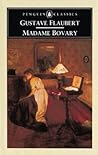
 Madame Bovary by Gustave Flaubert
My rating: 3 of 5 stars
This maybe a basic opinion but it is hard to enjoy a book where there is no one to root for. Flaubert’s ironic detachment and mockery of his characters is counterbalanced by moments in which their point of view is depicted with a hyperrealistic focus that engenders sympathy. Emma is a reckless fantasist but Flaubert’s sweeping florid style goes some way to endear her to the reader, to the point where her horrible fate feels cruel. She is a Quixote who’s obsessed with love rather than adventure, and some (like Harold Bloom) can be smitten. I still found her quite stressful to be around, perhaps because my parsimonious (bourgeois?) temperament finds debt horrifying.
So who survives in a world where enchantment and naïveté are punished so brutally? The scheming Lheureux is a transparent villain, the agent of Emma and Charles’s downfall. The book ends with Homais, the Voltaire-obsessed neighbour whose meagre capabilities establish him as a person of renown through sheer tenacity. He isn’t a leech like Lheureux, but his activity in the field of ideas is hardly above board either. Flaubert treats him as a figure of fun, and perhaps his success should be seen as an indictment on the imaginative potential of the society that Flaubert is writing about. But perhaps it’s also a model for enduring in such diminished circumstances.
View all my reviews