27.9.26

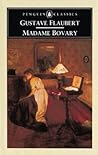
Madame Bovary

Madame BovaryMadame Bovary by Gustave Flaubert
My rating: 3 of 5 stars

This maybe a basic opinion but it is hard to enjoy a book where there is no one to root for. Flaubert’s ironic detachment and mockery of his characters is counterbalanced by moments in which their point of view is depicted with a hyperrealistic focus that engenders sympathy. Emma is a reckless fantasist but Flaubert’s sweeping florid style goes some way to endear her to the reader, to the point where her horrible fate feels cruel. She is a Quixote who’s obsessed with love rather than adventure, and some (like Harold Bloom) can be smitten. I still found her quite stressful to be around, perhaps because my parsimonious (bourgeois?) temperament finds debt horrifying.

So who survives in a world where enchantment and naïveté are punished so brutally? The scheming Lheureux is a transparent villain, the agent of Emma and Charles’s downfall. The book ends with Homais, the Voltaire-obsessed neighbour whose meagre capabilities establish him as a person of renown through sheer tenacity. He isn’t a leech like Lheureux, but his activity in the field of ideas is hardly above board either. Flaubert treats him as a figure of fun, and perhaps his success should be seen as an indictment on the imaginative potential of the society that Flaubert is writing about. But perhaps it’s also a model for enduring in such diminished circumstances.

View all my reviews

23.9.26

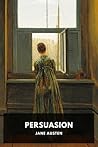
Persuasion

PersuasionPersuasion by Jane Austen
My rating: 5 of 5 stars

When I read this in school I felt frustrated by the propriety which delayed the reconciliation of the couple. I wasn’t reading closely enough, because Austen explains very well why Wentworth’s pride and resentment prevented him from immediately pursuing Anne again once he had made his fortune. It is also made clear at the very beginning of the novel that while Anne was persuaded out of accepting his offer of marriage, she had persuaded herself soon afterwards (when all of Wentworth’s promises of a brilliant career were fulfilled) that she had made a mistake. Austen is very severe with her heroine however. At the very end, Anne insists she was right to be persuaded, because it was the dutiful thing to do, even if the consequences were unhappy. Austen and Anne are not utilitarians.

This is a short and highly patterned novel. The contrivances of the plot arrange characters and scenarios in such ways as to continually suggest ironic echoes of the central dilemma of Anne rejecting Wentworth. Louisa’s self-assurance in the first half is a foil to show Anne’s superiority. And Mr Elliot and Mrs Clay in the second half are like something out of a crime novel – utterly psychopathic operators in the marriage market. Lady Russell is not quite so villainous, although it’s very hard for a modern reader to be sympathetic with her prejudiced outlook. This book is justifiably seen as Austen’s most accomplished achievement, and I’m finally in agreement with that view.

View all my reviews