26.11.17

The Night of the Hunted

Made on a ridiculously low budget and to a very tight four-week schedule, Jean Rollin somehow manages to create something evocative and eerie. The plot is rudimentary: a radioactive leak turns people into zombies, so they are imprisoned in an imposing corporate tower block and killed when the final brain-cell switches off. As with other zombie films, a nefarious corporate presence lurks in the background. The difference here is that the undead are innocent victims who are exploited and killed like sheep. This being Rollin, they are also beautiful and frequently unclothed, but you can read that in a reflexive direction if you want – the machine reducing people to attractive mindless bodies.


It ends up being a rather sweet film. The hero who is sucked into this nighttime conspiracy by the stunning Brigitte Lahaie is smitten, and joins her in becoming zombified. Perhaps love can't overcome all obstacles, but it's worth clinging on to nonetheless.

25.11.17

Immoral Tales

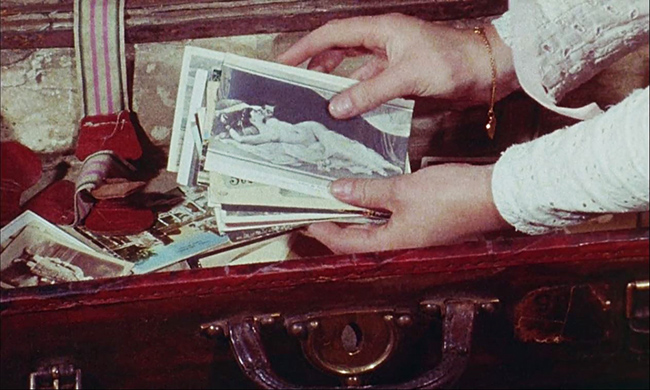
Borowczyk's four lewd, weird films don't really cohere without watching the introductory fifth. A Private Collection is just a catalogue of obscene objects, mostly of Borowczyk's own manufacture. In the enclosed space of a bourgeois flat dark secrets are revealed which underline the hypocrisy of the 'moral police'.

All very well as a tirade against censoring sex. But it's the sense of confinement that lingers. Borowczyk's eroticism is strangely sequestered and controlling. He beavers away at these films in the same way as he does his animations and props. It's a private universe in which he has the final say.


Thus we get a domineering youth who commands his cousin to fellate him while he lectures her on the movement of the tides. Then a girl besotted with the omniscient voice of God –  which provides sexual comfort in an environment of abuse. Then Elizabeth Báthory using her noble status to round up and butcher maidens so she can bathe in their blood. And finally Lucrezia Borgia led into the papal palace to be 'worshipped' by her father and brother.

Borowczyk is detail-orientated. He lovingly lingers over the objects that crowd his films, which is why A Private Collection is the apotheosis of his erotica – human flesh removed entirely. He is a set designer with a camera, a builder of entrancing but lifeless tableaus.

18.11.17

The Blue Sky Maiden (Blue Sky Daughter)

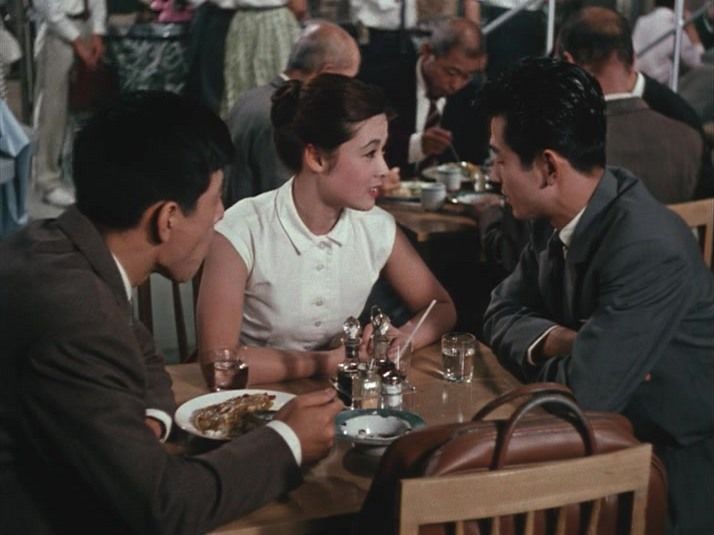
Masumura made a lot of films, only the more unconventional of which are well known in the West. I saw this at the BFI, and doubt it has a DVD release. There is no hint here of the perversities of Blind Beast or the gore of Red Angel. That said, Masumura’s interest in awkward family dynamics is front and centre, even if the genre is melodrama, and the ending happy.

Or so it may seem. Yuko is a Cinderella who finds a Prince Charming, but given everything we see of Tokyo living you wonder whether she was better off staying true to her roots and choosing the local boy from her village (her teacher, but that’s ok apparently). Yuko is illegitimate, and her father did her a favour when he sent her away from his nightmare of a family. Masumura is very good at showing that the fault ultimately lies with him. He was never reconciled to the loveless marriage he was talked into, and his indifference turned his wife into a harpy and his children into brats.


Yuko marries for love, but it’s another posh boy. There’s a subtle class divide bisecting the characters in the film, which Yuko steps over. A philosophy grad, Masumura’s sympathies lie closer to the philosophy-spouting delivery boy, as well as the hard-pressed family maid and the striving teacher-come-artist.

The plot comes from a novel, and Masumura handles the twists deftly. There’s a good deal of fancy camerawork where wide shots move into to closeups and back. And a satisfying shape to the film is provided by the opening and closing scenes on the shore, where blue sky thinking is embraced as a survival mechanism and then discarded when no longer needed. It’s accomplished, in other words, and goes to show that Masumura was good at this sort of thing. There’s a reason he made so many movies.

11.11.17

Thor: Ragnarok

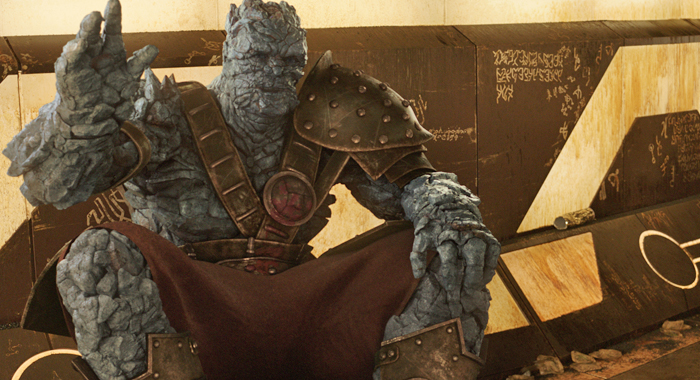
There's something interesting going on behind the jokes here. Director Taika Waititi casts himself as Korg, a failed revolutionary (he didn't print enough pamphlets haha) who leads an insurrection against Jeff Goldblum's gilded planetary Emperor. The film splices this rather awkwardly with the return of Hela to Asgard, but there is a parallel between the two stories. It turns out that before Odin became a cuddly grandpa enjoying his retirement, he and Hela were bloodthirsty empire-builders. Behind the paintings on the ceiling of the Asgardian throne room (which celebrate the virtue and diplomacy of Odin and his two sons) there is a darker history of conquest and genocide. There must be some resonance here for Waititi, who is from New Zealand and has a Māori father.


This may not just be a comment on the beastly British, but on how American soft power (of which Marvel Studios is a part) disguises the real hard power it can wield. The revolution isn't a joke, at least not entirely. Asgard falls at the end of the film – its people become refugees. Again there is a parallel with contemporary events, but the film flips it so it's not the victims of empire that are seeking sanctuary on Earth, but the beneficiaries. From being lords of the universe to being at the mercy of foreign hostile powers – there are bitter twists in this otherwise sugary cocktail of a film.

3.11.17

Red Angel

A very grim war film focused on a nurse on the front line and with plenty of horrible amputations, vomit and blood. As usual with Masumura, things take a turn for the bizarre and depraved. The hero is an angel in hell, who cannot countenance being responsible for other people’s deaths. The first of her ‘victims’ raped her, but she still tries to save him, in so doing establishing her saintly nature.

The film is at its most interesting when it explores the strange power dynamic of being a woman surrounded by damaged men. Nishi must suffer frequent sexual assault, but she is also the one holding soldiers down when their limbs are being removed. She is in a position to torture her torturers, but she never takes the opportunity, being loyal to the last.


Instead the film establishes a melodramatic romance between Nishi and a taciturn surgeon who is addicted to morphine. The drug makes him impotent, and Nishi has to hold him down as well through his withdrawal to cure him from that ailment. She helps to make a man out of him, and he dies with a broken sword in his hand. But she also gains power. In the sweetest scene in the film, the surgeon allows her to put on his lieutenant uniform, serves her wine and treats her like a man. Granted, he refuses to give her his sword and gun (there are limits to cross dressing and female empowerment), but it’s still a striking moment of reciprocity and empowerment.

28.10.17

Vertigo

I'm not a Hitchcock aficionado but am persuaded that this may be his best film. Plot-wise it's improbable to say the least, but the mechanics of the mystery thriller, with its clear-cut character motivations and alibis, have never been that intriguing to me. David Thomson may be right that film thrives on ambiguities, and Hitchcock's failure is that he is too fussy to leave things unexplained. Vertigo is interesting probably because it's more than just an exercise in suspense. There's a bit more of Hitchcock in it, and that gives the viewer more to delve into.

Specifically we get Hitchcock's own strange attitudes to women and actresses on screen. Kim Novak is remade twice in Vertigo. Her character is transformed by male desires for love and money. She is as Hitchcock (and his protagonist Scottie) want her: supremely acquiescent – the obedient actress submitting to her director.


But then there is the title sequence, which suggests that women’s faces are dangerously hypnotic. They spin you about – give you vertigo. Women as actresses are fascinating but deceptive. They leave you and lie to you. Novak is both imperious and vulnerable. In fact there's a tinge of sadomasochism in Madeleine’s grey suits, tightly-wound hair and gloves. Judy’s purple evening gown is looser, more relaxed – she is being genuinely herself. But Scottie forces her back into her corset.

And actually that idea is planted early with the chat about brassieres in the beginning of the film – prurient on Hitchcock’s part, but also introducing the idea of women moulded by the science and stratagems of male fetishists. Just as a famous airman turns to applying his know-how to the design of female underwear, so the detective turns to dressing up his girl so that she becomes his ideal woman. He's suffers for it, of course. Novak is killed off in a church by a nun – the Gothic scene suggesting the punishment of forbidden desire.

I ended up feeling most sorry for the friend-zoned Midge, who offers a safe way to deal with Scottie's agoraphobia – a stepladder in the living room. Instead he gets tangled up with a femme fatale and ends up climbing a church tower. Midge is a friend who interacts with Scottie on equal terms. But Scottie wants to dominate and be dominated by women. That is what draws him to Novak, and dooms him.

26.10.17

Blade Runner 2049

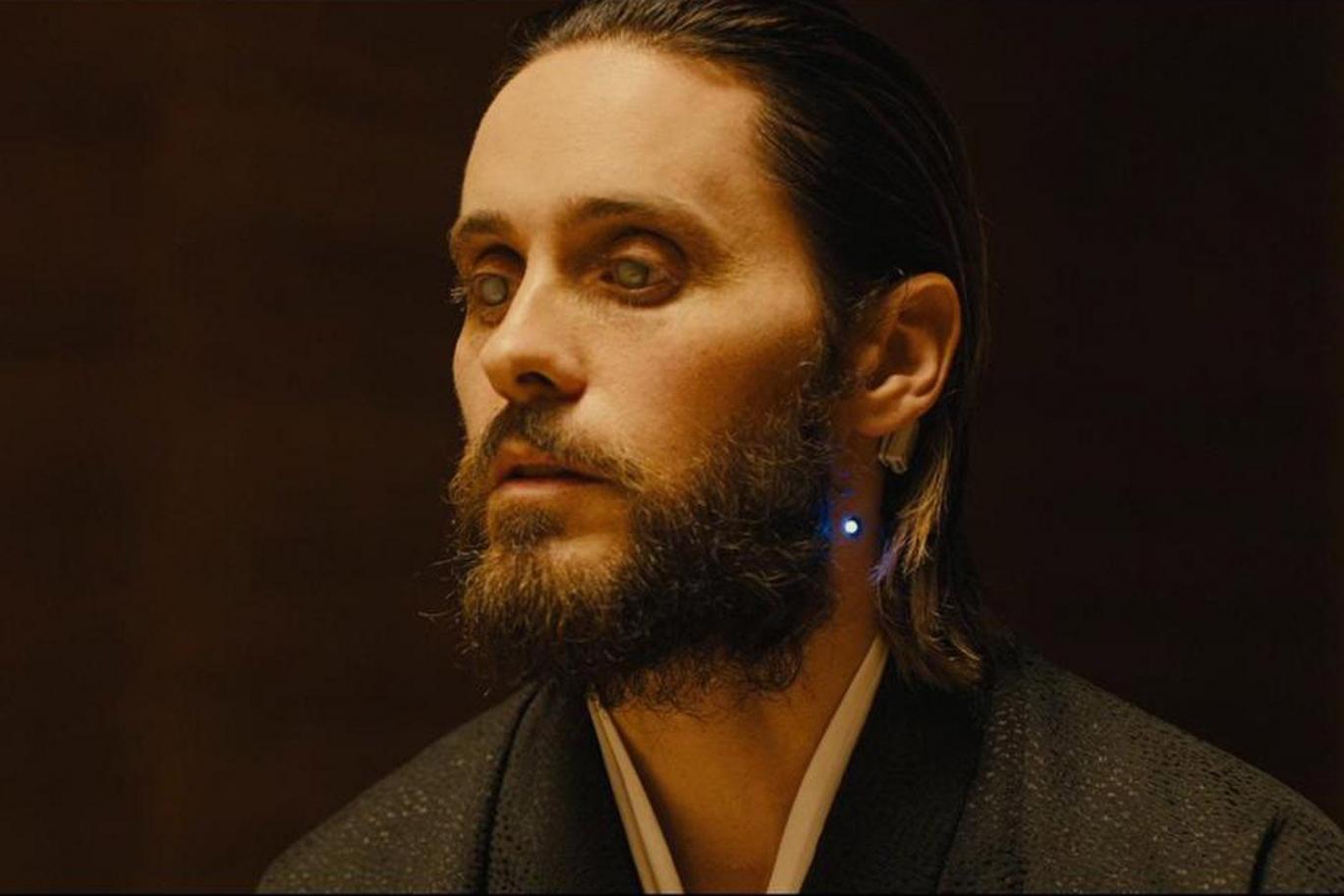
Helen Lewis’s blog is a superb intro to the concerns of the film, although I disagree with her reading of K’s confrontation with the 50 foot advert version of his artificial girlfriend Joi. Lewis thinks it’s an attempt to "create a touching moment of remembrance" which fails. But at that point K is once again convinced he is a droid, and the girlfriend he lost is just another AI. The scene felt to me like a recognition that their relationship was a lie, they are both slaves, and the only way to reclaim freedom is to fight the owners of the means of production.


I’m not entirely sure what the plot of the film is, but I’m pretty confident it doesn’t make a great deal of sense. It doesn’t matter if you come for the mood of the thing (and at three hours it's plenty moody). All the characters look and act like replicants, the bad guy at the top of the pyramid most of all. The film is about a longing for the organic and genuine in an artificial alienating world. And as such it is a triumph.

15.10.17

'For anyone afraid that ignorance renders him ineligible for responsibility, politics is not the right profession.' - Edmund Dell, The Chancellors

16.9.17

Fullmetal Alchemist: Brotherhood

It's probably inevitable that a story about alchemy with a happy ending must involve the renunciation of pride and ambition. Much like Frankenstein or Faust, alchemists dabble in forbidden knowledge and are punished for it. The big bad in this anime series wants to know all the secrets of the universe and live forever – usurp God's rightful place. God is having none of it however. The anime portrays him as a grinning white human outline, and he condemns the pretender to his throne to eternal despair. On the other hand, our hero Edward Elric renounces his genius for alchemy with the claim that self worth is not bought with knowledge but is conferred by one's peers – your family and friends. The grinning God is well pleased with this answer, and rewards Edward by returning his brother Alphonse from death.


This theological condemnation of human curiosity feels rather old-fashioned in the gnosticism-infused times we live in, where the Fall of Mankind is spun as a positive development à la His Dark Materials. Fullmetal Alchemist is a bit more Raiders of the Lost Arc – peering into the holy of holies will melt your face. It's also a bit weird that after apprehending the big truth that we are limited, foolish creatures who don't deserve enlightenment, Edward leaves his family and friends again at the end of the series chasing after more knowledge. The anime glamourises lone questing male heroes who must abandon their partners and children in the process of said quest... all while talking up how family is the preferred avenue of fulfilment.

But leaving these contradictions aside, the series is very good at exploring the consequences of ambition, both in the way it reduces people to a means to an end (philosopher stones are literally products of genocide), and also in the suffering left in its wake. The anime is set after the events of a brutal war against dark-skinned, red-eyed Ishvalans. In the original manga, this was a comment on the displaced Ainu of Japan. In Brotherhood it's easier to draw parallels with more recent conflict in the Middle East. What is interesting is that the purported 'good guys' have very clearly committed atrocities in the past. Likewise the most prominent Ishvalan character starts out as a terrorist, a religious zealot, and a murderer of innocents. Despite perpetrating unforgivable crimes, both he and his oppressors are given a shot at redemption, and an opportunity to reconstruct their war-ravaged societies.


This doveish theme is undercut slightly by the very prominent fascistic iconography employed by the series. The country is ruled by a Fuhrer, the setting is an alternate version of early 20th century central Europe where democracy is crumbling, and service to your commanding officer is presented in glowing terms. Roy Mustang, who emerges as the new Fuhrer at the end of the show, has as his guiding philosophy the paternalistic notion that if he looks after his subordinates, and they look after their subordinates, well-being will filter down to the country at large. Of course setting an example is important, but the checks and balances of a functioning republic only get a cursory mention, and I know which I'd rather rely on.

In any case, Brotherhood is not immune to the trope of government conspiracies, corruption and factional infighting frequently found in depictions of politics in Japanese media. Edward Elric's impetuous irreverence is the only protest levelled at the inevitability of these shenanigans, and it's an impotent one. The wheels of the machine keep turning, and resignation (like that of Edward's father) appears to be the only mature response.


It's very watchable, of course. Game of Thrones fans have no right to sneer at it (or to ever talk about fan service). Fullmetal Alchemist: Brotherhood is often more harrowing, but also infinitely funnier than George R.R. Martin's grim fantasy. Also, at 64 half-hour episodes, is more digestible and compressed than Game of Thrones. I was particularly impressed with the very tight plotting of the initial episodes, where a great deal of information is crammed in. The series slows down and stretches out as it goes on, to the point where the climactic final day goes on for something like 10 episodes. But the action never slows down, and my interest never faltered. It's an accomplished performance throughout, and well worth your time.