Showing posts with label Wes Craven. Show all posts

15.8.19

Scream

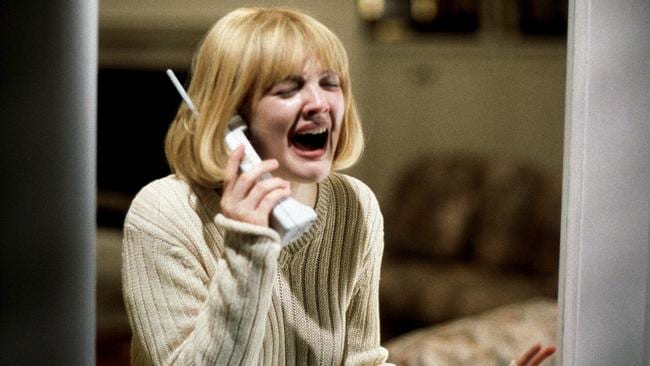
There is a strain of nastiness to Wes Craven that I find a little unsettling. For the pivotal initial sequence in Scream, Drew Barrymore had told him about an instance of animal cruelty that had horrified and upset her, the memory of which Craven then used during the shoot to elicit a more convincing performance. That requires a lot of trust between director and actor, and in fairness, Craven acknowledges and is grateful for Barrymore's courage in making herself vulnerable in front of the camera. But having a director resort to such methods is still a bit unnerving.


The script was shopped around and could have gone in a bunch of ways, but with Craven attached it ends up as a genuinely scary movie – at least until the killer is unmasked and the film skips into absurdity. The irony of characters in a slasher film being aware of the conventions of slasher films is heavily present throughout, but the meta element becomes almost deafening in the scenes between Neve Campbell's 'final girl' Sidney and her boyfriend Billy (played by Skeet Ulrich as if he's channelling Johnny Depp). The latter speaks almost exclusively in film metaphors, so we really should have seen it coming.
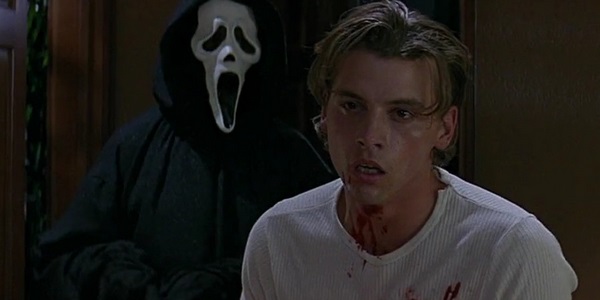

The killer's motives are a joke, and used as just another comment on horror films (it's scarier if you don't know apparently). In fact the real motive is something Craven has been exploring throughout his career – the derangement of not being able to differentiate between reality and fiction. The money shot (horror films are in their way just as formulaic as porn) that encapsulates Scream is the TV falling on the killer's head and frying his brain. These kids are exactly what the censors of video nasties fear – that watching this stuff can turn you into a violent maniac. And the fact that it was accused of inspiring copycat murders perfectly rounds off the film's satirical project.

20.5.12

The Last House on the Left

I'm gonna transcribe a little bit of a David Hess interview on my DVD where he talks about the infamous rape scene in the movie:

"In this scene... um... she was like a lox. There was no reaction from her. For hours we tried to film this scene. So the reaction that you see on the screen is that I scared her. I ripped her pants off during the filming... and she probably thought that I was gonna penetrate her. I had no intention of doing that, absolutely not. But that's the reaction you see on the screen, and that's why people react to it so much in terms of the violation of a woman. But at the same time, it's a film. It's a film. I'm an actor, and I'm wanting to get something from her which wasn't coming. I mean, you either do it or you cut the scene."

The actress who plays the victim is called Sandra Peabody, and she doesn't appear in any of the extras on the DVD. In the documentary about the film, the cast say that Hess was a method actor, that he behaved in an arrogant and distant manner, and that Peabody was frightened of him and the other actors. Marc Sheffler, who played Junior, retells a story in which he threatens to throw her off a bridge if she didn't hit her scene. Wes Craven chuckles that as a first time director with no credentials running a skeleton crew in a forest, Peabody might well have been scared about how far they would go.

Sounds to me like she was put through some horrifying experiences in the process of making this film, and I'm amazed that the people involved can laugh about that, and that they are not called out on it. I mean, I don't want to sound like a lawyer, but isn't this kind of harassment criminal? It's strange that the controversy surrounding this film revolves around the effect it MIGHT have on its audience, rather than the effect it DID have on some of its actors...

The film itself is more a piece of history rather than a piece of art. It is made by amateurs, and it shows. Wes Craven talks about wanting to put Vietnam footage in the heart of America, as well as processing a certain amount of anger at his upbringing, which led him to shoot horrifying sexual violence in cinéma vérité style. My feeling is that the audience is both implicated and distanced from events, and that the film does not escape glamourising its murderers, or sexualising its victims. Its position is confused, and its messages miss their mark. I would have liked Craven to have found another way into the movie business, and I suspect that, quite often, he would have liked the same.

15.9.11

Nightmare on Elm Street

"Tina didn't want to sleep alone"... and that's why she had to DIE. Horror's condemnation of pubescent sexuality is something I'm quizzical about, since it eagerly teases its audience with nubile ladies and then takes rather sadistic pleasure in ripping them to pieces. Perhaps the intention is to reveal the dangerous qualities of aggressive, domineering male sexuality -- putting the audience in the place of the helpless. But there is a voyeuristic tone to some of the scenes that compromises the force of the message, but I'm thinking of Halloween more than Nightmare on Elm Street.

The latter gets to the heart of the issue by dealing with the power of fantasies and dreams directly (Blue Velvet is pretty much about the same thing). Krueger has chosen to abandon reality and realize his most selfish and antisocial desires. He is also a symbol for middle class fears of the feral working class (he likes to hang out in a factory). The hero has to learn how to identify what's real from what is imagined, and conquer it (the booby-traps as a symbol for the mastery of nature?). But ultimately, we cannot escape the fact that we are prisoners of our senses and what our imagination does with the information they give us. We make our own reality, and we can't always control what goes on in it -- Freddy can always sneak out and get you if you're not careful.