24.12.18

44 Books for 2018

Until October this year I was able to borrow books from Senate House Library, which is one of my favourite buildings in London and a superb academic library. I tried to make the most of it, although apart from a few more accessible history and politics tomes I mostly gravitated towards my usual nerdy interests (Tolkien, anime etc). That accounts for the sheer amount of non-fiction I got through this year – stuff I read in the hope it would make me wiser but then almost immediately forgot. I've determined to read more novels in 2019 – at least the texture of a story stays with you a little bit more, even if the content evaporates.

I tried to think of intelligent things to say about comics this year, and although I managed three columns for the London Graphic Novel Network, I'm not convinced I succeeded. It's a bit of a struggle at the moment to find creators to get excited about, but perhaps that's just a failure on my part to be more curious. I'm hoping that re-reading some of the books that got me into the medium in the first place will kick-start my interest in the new year.

I keep track of the things I read on Goodreads, although I've yet to find the will to do more than assign stars to reviews there. Apart from the comics, the links below are just to snippets I thought were interesting and worth reproducing on the blog, or pretty pics I've taken of the covers to put on Instagram.

Tim Shipman - Fall Out: A Year of Political Mayhem
Tim Bale - The Conservative Party: From Thatcher to Cameron [link]
Harriet Harman - A Woman's Work [link]
Philip Cowley, Rob Ford (eds.) - Sex, Lies and the Ballot Box: 50 Things You Need to Know About British Elections [link]
Simone de Beauvoir - The Ethics of Ambiguity [link]
Sarah Bakewell - At The Existentialist Café: Freedom, Being, and Apricot Cocktails
Anthony Gottlieb - The Dream of Enlightenment: The Rise of Modern Philosophy [link]
Declan Kiberd - Ulysses And Us: The Art Of Everyday Living [link]
Dennis C. Rasmussen - The Infidel and the Professor: David Hume, Adam Smith, and the Friendship That Shaped Modern Thought [link]
Tom Shippey - J. R. R. Tolkien: Author of the Century
Susan J. Napier - Anime from Akira to Howl's Moving Castle: Experiencing Contemporary Japanese Animation [link]
Adam Roberts - Science Fiction
Mark Fisher - The Weird and the Eerie [link]
Pauline Kael - The Age of Movies: Selected Writings [link]
John Mullan - How Novels Work
Paul Addison - Churchill: The Unexpected Hero [link]
Peter Clarke - Keynes: The Rise, Fall, and Return of the 20th Century's Most Influential Economist
Maggie Nelson - The Argonauts [link]
Harold Bloom - The Anxiety of Influence: A Theory of Poetry [link]
Sigmund Freud - Civilisation and its Discontents

M. John Harrison - Viriconium
Jun'ichirō Tanizaki - The Key [link]
Raymond Chandler - Farewell, My Lovely
Anaïs Nin - Little Birds
J.M. Coetzee - Disgrace
Margaret Atwood - Surfacing
Yasunari Kawabata - House of the Sleeping Beauties and Other Stories
John le Carré - The Constant Gardener
Norman Mailer - An American Dream
Chris Mullin - A Very British Coup [link]
Various - Inside And Other Short Fiction: Japanese Women By Japanese Women

Harvey Pekar - American Splendour [link]
Edward Ross - Filmish: A Graphic Journey Through Film [link]
Meg-John Barker,  Julia Scheele - Queer: A Graphic History [link]
Pat Mills / Greg Staples / Clint Langley - Slaine: Lord of Misrule
Garth Ennis / Facundo Percio - Caliban [link]
David Lapham / German Nobile - Caligula vol. 1 [link]
Billy Tucci - Shi: The Way of the Warrior
Randy Queen - Darkchylde
David Wohl / David Finch - Aphrodite IX: Time Out of Mind
Brandon Choi / Jim Lee / J. Scott Campbell – Gen¹³
Fabien Nury / Mathieu Lauffray / Mario Alberti / Zhang Xiaoyu / Tirso - The Chronicles of Legion vols 1-4
Hiroaki Samura - Blade of the Immortal Omnibus 1
D.J. Bryant - Unreal City

23.12.18

"My belief, drawn from the women's movement, was that everyone had the right to be treated fairly and to have the opportunity to fulfill their potential, and in order to progress towards that the government had to take an active role. Equality is necessary for the individual: it is a basic right to be free from prejudice and discrimination. It is necessary for society: an unequal society can't be at ease with itself; an equal society generates greater social cohesion. And it is necessary for the economy: a modern economy thrives in a culture which offers employers the broadest labour pool, makes sure that everyone of working age who is able to participates in the labour market, rather than some being marginalized or excluded, and recognizes that diversity makes us outward facing as a country, helping us to compete in the global economy." – Harriet Harman, A Woman's Work

14.12.18

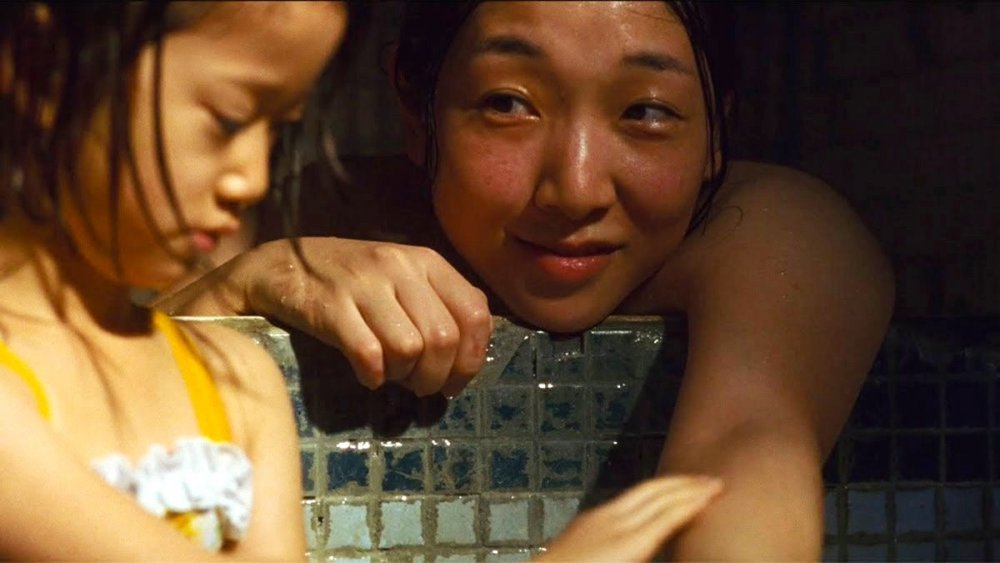
Shoplifters (Shoplifting Family)

The premise of the film is that a family of thieves kidnap a young girl and adopt her – they turn from stealing things to stealing people. You could extend the thieving metaphor to the entire family. They are not related by blood – their bonds are formed by money and necessity. But this is Kore-eda's 'socially-conscious' film, and so what would on the surface look like reprehensible behaviour becomes more explicable once you inhabit the house and become one of the gang. The child they have adopted was being abused by her parents. Her older 'brother' was left in a car while his carer was playing pachinko. The central couple are on the run after a murder of an abusive husband (in self-defence), and while they room with a grandmother whose pension helps them get by, they have in a sense adopted her as well after she was 'thrown away' by her real family. The film keeps returning to the idea that this family is chosen rather than the result of an accident of birth. And in some ways that makes it more honest.


The only other Kore-eda film I've seen is Our Little Sister, which tells a similar tale of family formation but in a more comfortable, middle-class setting. That film was cute, but it meandered aimlessly and slipped too easily from drama to melodrama. Shoplifters is much tougher – the only slightly soppy moment is when the boy finally uses the word 'father' to describe his relationship with his carer and mentor. And even then it's undercut first by the awareness that he's unlikely to see his adopted family again, and then further when we switch to the girl looking out of her balcony in the hope of being saved from her real parents by her adopted family. The genius of the film is to turn that theft, and all the other stealing we see, into an act of kindness.

5.12.18

"Fatally estranged from the transcendental difference that grounds human identity, the transgendered subject is barely human, condemned forever to "idiotic masturbatory enjoyment" in lieu of the "true love" that renders us human. For, as Žižek holds – in homage to Baidou – "it is love, the encounter of the Two, which 'transubstantiates' the idiotic masturbatory enjoyment into an event proper."

These are the voices that pass for radicality in our times. Let us leave them to their love, their event proper." – Maggie Nelson, The Argonauts

20.11.18

Vampyros Lesbos

In the DVD interview, an admittedly ancient Jess Franco said he made the film because he thought vampires were classy and lesbians were sexy. Unfortunately there's not much more to this Euro-shlocker classic from 1970, which lacks the mystery and invention of the French sleaze-masters Alain Robbe-GrilletJean Rollin and Walerian Borowczyk. The avant-garde soundtrack enjoyed a resurgence in the 1990s, but in the context of the film it's wildly discordant and jarring, although perhaps I'm just not made for this sort of stuff, finding Goblin's celebrated work on Argento's Suspiria equally ridiculous. Franco apparently made over 160 films in the course of a long lifetime, some of which have been lost. On the basis of this supposed highlight, would guess a lot of them were pretty disposable.

18.11.18

Robocop

This might just be Verhoeven's most straightforward satire, in which the ironic stance isn't compromised by the director's complicity in what he's showing us – something that drags down Basic Instinct and Showgirls and even Starship Troopers. Perhaps it's a product of the slightly scrappier look of the picture. This was Verhoeven's first big budget sci-fi action film, and although the suit cost a fortune, it otherwise doesn't have the sheen of his work in the 90s. Its grit makes it less alluring, but it also makes it a purer work, not as contaminated by Verhoeven's taste for exploitation.


Being a comics kid first, this reminded me a lot of Frank Miller's brilliant 80s books – The Dark Knight Returns, Ronin, Elektra: Assassin –  not only in its cyberpunk aesthetic but its satirical bent, particularly when it comes to including an exaggerated version of American television news and advertising. Frank Miller contrasts the superficiality and decadence of the media with his stoic, hardboiled heroes clinging on to a notion of chivalry that's dying around them. To some extent Verhoeven follows this line – especially in his crass depiction of the criminals driving 'Old Detroit' to ruin. But Murphy is a more interesting hero because he is also a victim – the corporate powers-that-be hijack his body and programme his mind so he cannot compromise the company that owns him. He becomes a symbol of a society in which people have become products, treated as means rather than ends. Nothing in Verhoeven's later science fiction work is as simple and as powerful as that central idea.

28.10.18

Maquia: When the Promised Flower Blooms

An overlong high-fantasy anime released this year. It concerns a race of immortal weavers who isolate themselves from the world and record its history through the reams of tapestry they produce. The main character Maquia is warned off forming attachments by the clan's chief, who says such entanglements end in unhappiness. To love is to be alone.


The story is set up to refute this thesis. Maquia's home is attacked and she finds herself stranded far away from her country. Moreover, she finds a newborn child whose mother has been murdered, and decides to adopt and care for him. The immortal is brought down to earth, and has to deal with the real-world pressures of motherhood. Although the anime wanders off into a steampunky Laputa-esque fantasy narrative about clashing kingdoms, that stuff ultimately provides a backdrop for Maquia's relationship with the growing Ariel, who she looks over as he matures, falls in love and has children of his own.

Parenting is therefore the central theme of the story. The decision to have children is a way of ending your detachment from the world. You have skin in the game in a way you don't when you dispassionately look over events from an ivory tower, as the weavers (literally) do. It's significant that the director Mari Okada is one of the few female creators making internationally-fêted anime films. It's a valuable perspective to have in what is mostly a male-dominated industry.


The anime strains very hard to build to an emotionally powerful ending, slipping into melodrama if not bathos in the effort. I found this a bit cloying and wearying, and note that the understated approach of masters like Miyazaki and Takahata is often more effective. Okada also doesn't effectively integrate the personal story of Maquia and Ariel with the wider tale of the kingdom they live in. Instead there are awkward leaps between one and the other, making the whole thing feel longer than its 115 minutes. It's not perfect, in other words. But then again, there's also nothing quite like it.

27.10.18

"Just as the infinity spread out before my gaze contracts above my head into a blue ceiling, so my transcendence heaps up in the distance the opaque thickness of the future; but between sky and earth there is a perceptual field with its forms and colours; and it is in the interval which separates me today from an unforeseeable future that there are meanings and ends toward which to direct my acts." - Simone De Beauvoir, The Ethics of Ambiguity

26.10.18

Calvary

The film isn't shy about drawing the parallels between Brendan Gleeson's Father James and Christ. He is a good man. He knows that he is to be killed. He dies for the sins of others. In the final moments of the film it's implied that his gospel of forgiveness has at least one convert: his daughter picks up the phone to his killer – a superhuman act of forbearance and mercy.


John Michael McDonagh's approaches the issue of abuse in the Catholic church in a sideways and scattershot fashion. The film's characters treat it with lacerating black humour rather than earnestness. There's something deeply weird about how disconnected the performances are from any shred of sincerity. When Father James picks up his daughter from the train station and sees the evidence of a suicide attempt, he makes a joke, and she responds in kind. It's the sort of wisecrack-rich dialogue you would get in noir – and perhaps this is one.

There is a mystery, after all: who will kill the priest? But actually guessing the identity of the murderer is a mug's game. There's no hint dropped during the priest's rounds through the week that points to the killer. It could be anyone. And in a sense, it is. Father James is persecuted by the society around him, who mock his attachment to a faith and institution that has been discredited.

My favourite character in the film is Dylan Moran's obscenely rich Michael Fitzgerald, who made his millions in finance and then fled to the countryside after the 2008 crisis to avoid prosecution for the 'irregularities' he was responsible for. He makes explicit the tenor of detachment in the film, at times coming close to sounding like Camus in his bemusement at the meaninglessness of existence. The contrast that structures the story is between this community's listless sliding towards suicide and the integrity and courage Father James gains from his faith.


John Michael McDonagh calls attention to the artificiality of his film. At one point Father James discusses with his daughter what the third act twist of their play will be. On many occasions characters comment on the poor lines McDonagh has given them. The effect has the most bite when Aidan Gillen complains that his sarcastic doctor character is a cliche, and that Brendan Gleeson has a better role to play. For me this starts to smell a bit of the filmmaker apologising for his work rather than standing behind it. Admitting that the pieces don't fit doesn't actually make the pieces fit any better. If the film ends up overreaching itself, and relying a little too much on Gleeson's performance to pull it together, it's nonetheless still very watchable. And Gleeson is very good company.